
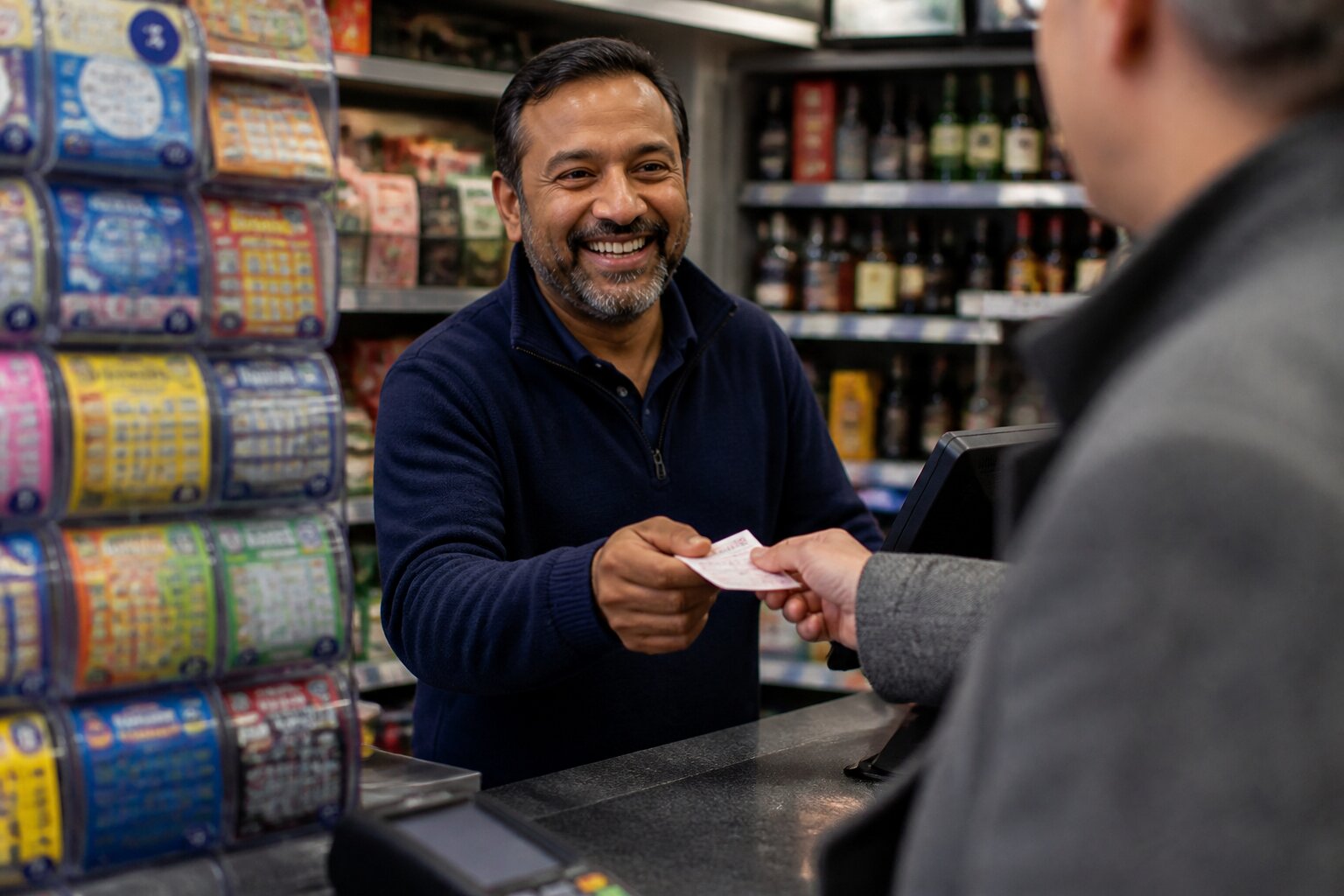
Have you ever queued up at your local shop for your weekly Lotto ticket and wondered what happens if they end up selling the jackpot winner? There’s a buzz that seems to follow outlets after a major prize is sold—people start buying tickets there more often and the shop can feel busier than usual. At the same time, stories circulate that shopkeepers themselves pocket a sizeable reward for handing over a life-changing ticket.
That sense of mystery is understandable. Selling a ticket that turns someone into a millionaire feels like a big moment for a neighbourhood retailer. But does the store actually receive a share of the prize money, or does all the cash go directly to the player?
Let’s take a closer look at what retailers can expect when they sell a winning National Lottery ticket and how the system works in practice.
How Are Retailers Rewarded for Selling a Winning Lottery Ticket?
Retailers are paid for selling tickets, but the payment is based on standard sales commission rather than on whether a ticket later wins a prize. In the UK, every authorised outlet receives a small, fixed percentage of the ticket price as commission. For a typical £2 Lotto ticket, that is usually about 10p.
There is no automatic, larger bonus for the retailer simply because a ticket they sold becomes a jackpot winner. That means when a store sells a ticket that later pays out a major prize, the retailer’s direct payment from that sale remains the ordinary commission on the ticket price. Occasionally there are short promotional campaigns that offer a one-off bonus for selling top-tier tickets, but these are exceptions and are clearly advertised with terms and limits.
While a big win can generate publicity that brings more customers through the door, the retailer’s immediate financial gain from the winning sale is the same small commission every ticket carries. In the next section we’ll look at the specific factors that set that commission level.
What Determines the Amount a Store Receives?
The commission a retailer receives is determined by the official rules governing ticket sales and is tied to the ticket price rather than the prize amount. In practice this means the same commission percentage applies whether the ticket wins nothing, a small prize, or a large jackpot.
For example:
- A £2 Lotto ticket typically yields around 10p to the retailer.
- A £2.50 draw ticket would return slightly more, based on the same percentage.
- A £1 scratchcard produces its corresponding share.
Promotional bonuses can occur, but when they do they come with explicit conditions and limits. Operators publish the terms for any such campaign, including whether there is a cap on the amount a retailer can receive during the promotion period.
Clear rules keep payments straightforward and prevent the prize size from altering the retailer’s commission. This stability means retailers can plan with predictable income from ticket sales. Moving on, it’s also useful to consider whether selling several winners changes a store’s pay.
Can Stores Earn Bonuses for Multiple Wins?
Retailers are paid the same commission for every ticket sold, and each winning ticket is treated as a separate sale. The routine payment structure does not include an extra cumulative reward for placing multiple winning tickets on the same premises.
Retailers should therefore expect to receive the standard commission on each individual transaction, regardless of how many winning tickets they happen to sell in a given period. This keeps accounting straightforward and avoids any automatic escalation of payments based on the number of winners linked to a single outlet.
What Happens With Several Winners From the Same Shop?
If a shop sells multiple winning tickets—across scratchcards or draw games—each sale generates the standard commission. There is no additional sum automatically added because more than one winner left the shop on a single day.
In practice, that means a shop that has a lucky run of winners will be paid for each ticket sold in the same way as it would for any other tickets. Any perception that multiple wins should trigger a special bonus is not reflected in the normal commission structure.
Are Bonus Payments Ever Capped?
On the rare occasions when a promotional bonus is offered to retailers, the promotion’s terms set out any caps or limits. Typical promotional rules might:
- Apply only for a limited time and to specific prize levels.
- Define a maximum bonus payable to a single retailer during the campaign.
Outside these temporary promotions, retailers receive only the usual commission for each ticket sold. The predictable nature of commission payments helps retailers understand their revenue from lottery sales without needing to factor in speculative bonuses. Next, we’ll examine whether retailer commission influences ticket pricing for players.
Do Lottery Store Commissions Affect Ticket Prices?
Retailer commission is built into the system so the price paid at the till is the same at every authorised outlet. Ticket prices are set centrally by the operator, and retailers must charge the stated price to customers. That means shoppers will not see different prices or extra charges based on where they buy a ticket.
For example, a £2 Lotto ticket costs £2 at every authorised outlet. The retail commission—typically around 5% of the ticket price—is part of the business model but does not appear as a separate fee on the purchase. This uniform pricing protects players by ensuring transparency and consistency across all outlets.
Keeping prices fixed across retailers also supports fair play and clear expectations for customers, while allowing retailers to earn a small but steady contribution from ticket sales. Understanding this pricing framework helps explain the broader benefits lottery proceeds can bring to communities.
How Do Lottery Payouts Benefit Local Communities?
The effect of lottery sales extends beyond retailer commissions. A significant portion of ticket income is allocated to good causes, funding projects in sport, arts, heritage, and community services across the UK. These funds have supported park refurbishments, community health services, arts programmes, and volunteer-run local initiatives.
At the local level, commissions from ticket sales help keep small retailers trading, while the broader distribution of funds provides resources for community projects that might otherwise struggle to find backing. Over time this structure has channelled substantial sums into public benefit projects, making a tangible difference in many areas.
While retailers may see increased footfall and local recognition after selling a high-value ticket, the main community impact comes from that wider distribution of funds and the steady support it provides. With that context in mind, the final section summarises what store owners can reasonably expect when a winning ticket is sold.
The Bottom Line: What Store Owners Can Expect When Selling a Winning Lottery Ticket
Selling a ticket that later becomes a major prize generator brings attention to a shop, but the retailer’s direct payment for that sale is the standard commission on the ticket price—typically around 5%. There is no automatic large payout to the retailer for selling a jackpot-winning ticket. Rare promotional bonuses may be available from time to time, always with clear conditions and limits.
For shop owners, the ongoing benefit lies in regular ticket sales and any increased customer interest following a high-profile win. For communities, the larger advantage comes from the way ticket revenues are distributed to support public projects. Participation should remain an enjoyable activity within personal means, and the system is designed so that both retailers and the public can see consistent, transparent outcomes from lottery sales.
All in all, a retailer’s reward for selling a winning ticket is steady commission and potential local publicity, while the prize itself goes to the ticket holder and wider funding channels that support community projects.
**The information provided in this blog is intended for educational purposes and should not be construed as betting advice or a guarantee of success. Always gamble responsibly.