
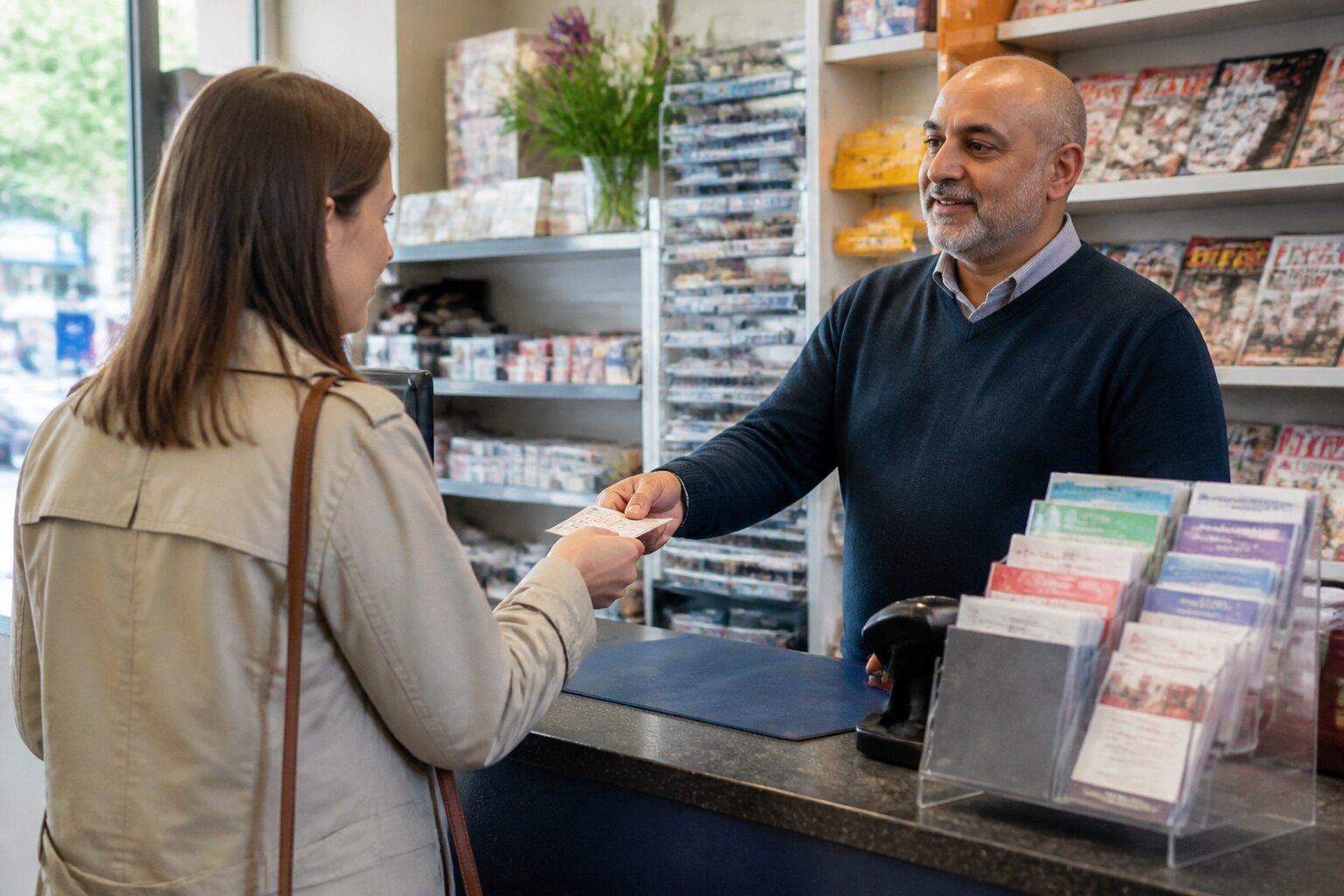
Wondering if you can still pop down to your local shop to buy a lottery ticket? With more ways to pay and play than ever, it’s a reasonable question.
You’re not alone if you’re unsure what remains possible in person as more services move online. From corner shops to supermarkets, the practicalities of buying tickets have changed over time.
This guide sets out where you can buy tickets, what types are sold, and what to expect when you buy in person.
Where Can You Buy Lottery Tickets in Person?
You can still buy lottery tickets face-to-face at many locations across the UK. Authorised retailers sell draw tickets and scratch cards directly over the counter.
Supermarkets often have lottery terminals at customer service desks or near checkouts, while independent corner shops and newsagents frequently carry both draw tickets and instant-win scratch cards. Petrol station shops and some post offices also sell tickets where they are authorised to do so.
Look for notices showing the lottery logo to be sure a retailer is authorised to sell tickets. Buying only from official points of sale ensures your ticket is valid and your purchase is covered by the operator’s rules. If you want to know what types of tickets you can pick up when you visit a shop, the next section explains the common options.
Which Types of Lottery Tickets Are Available in Shops?
Authorised retailers typically offer a mix of draw tickets and instant-win games, all subject to regulation and age checks at the point of sale.
National draw tickets include Lotto, EuroMillions, Thunderball and Set For Life. These are printed at the till after you choose numbers or ask for a Quick Pick, where the terminal generates numbers for you. Once paid for, you receive a printed ticket that you should keep safe because it is required to claim any prize.
Scratch cards give an immediate result: you reveal the play area and see whether you’ve won. Each card displays the odds and prize breakdown on the back, and these products are supplied through official channels to authorised retailers. With both draws and scratch cards, retailers are required to ensure purchasers meet the legal age limit.
Are There Any Restrictions When Buying Lottery Tickets Over the Counter?
There are clear rules for in-person purchases. You must be at least 18 to buy any lottery product, and staff will check ID if age is uncertain. Retailers also follow procedures for self-exclusion schemes: anyone registered should be prevented from buying at participating outlets.
Shops operate under licence conditions that set out age verification, staff training and other safeguards designed to protect customers and vulnerable adults. Staff are trained to ask for recognised forms of identification where necessary and to refuse a sale if they cannot be satisfied that the buyer is of legal age. Where appropriate, retailers will keep records and follow internal processes to show they have acted correctly.
These rules help make sure that sales are conducted lawfully and consistently. Retailers may also refuse a sale for other safeguarding reasons, for example if a customer appears to be vulnerable or under the influence of alcohol or drugs. If you need to understand how exclusions or age checks are applied, the next section explains who is authorised to sell tickets.
Who Can Sell Lottery Tickets in the UK?
Only retailers appointed by the lottery operator and authorised to sell products are permitted to offer draw tickets and instant-win cards. Each authorised seller must meet standards covering staff training, age checks and secure handling of tickets.
These checks help prevent underage sales and ensure retailers follow consistent procedures when selling tickets and handling claims. Retailers are also subject to regular audits and must comply with reporting requirements, which supports transparency and consumer protection.
Knowing that a shop has permission to sell lottery products gives customers confidence in the validity of any ticket purchased. With that in mind, the following section outlines what happens when you buy a ticket in store.
How Do In-Store Lottery Purchases Work?
Buying a ticket in a shop is straightforward and immediate: you choose a game, pay, and leave with a printed ticket or scratch card. Keep the printed ticket safe, as it serves as proof of purchase and is needed for any prize claims.
Smaller wins can usually be claimed back at an authorised retailer, while larger prizes require contact with the lottery operator and may involve additional verification. Lost or damaged tickets are difficult to process, so signing the back of a paper ticket and storing it securely reduces the chance of problems. Now that you know how purchases work, it helps to consider the advantages of buying in person.
Benefits of Buying Lottery Tickets from Shops or Newsagents
There are practical reasons people choose to buy tickets in person. A physical ticket is handed over immediately, which some shoppers prefer to having an entry recorded electronically. Retail staff can answer questions on the spot about games, ticket types and the claims process.
For those who prefer paying with cash, or who like the convenience of picking up a ticket while doing other shopping, in-store purchases fit naturally into a routine. A paper ticket also serves as a visible reminder to check draw results and to keep play within a chosen budget. Next, the piece compares in-store purchases with online options to help weigh up the security and convenience of each approach.
Is It Safer to Buy Lottery Tickets in Person or Online?
Both in-store and online routes are secure if you use authorised services. Physical tickets require careful safekeeping because they are needed to claim prizes; signing the ticket reduces the risk of a third party presenting it. Online purchases are tied to an account, which removes the risk of losing a ticket and may allow smaller prizes to be paid directly into an account, subject to the operator’s processes.
Online accounts need strong passwords and vigilance about phishing attempts, while in-person buyers should only deal with authorised retailers and avoid sharing personal details with unknown third parties. Each route has trade-offs between convenience and how responsibility for ticket security is handled, so choose the option that best fits personal needs and comfort with digital services. Misunderstandings about in-store buying are common, and the next section dispels a few of them.
Myth: Certain Shops Get “Luckier” Tickets
Some believe certain shops sell winning tickets more often, but ticket allocation is random and uniform across authorised retailers. No shop has an advantage in the distribution of winning tickets.
Concerns about counterfeiting are also overstated: modern tickets include security features and barcodes that help prevent fraud, and retailers scan tickets during purchases and claims. While physical tickets can be lost, checking numbers soon after a draw and signing a ticket helps protect owners.
Worries that shops might refuse to pay valid prizes are rare in practice; authorised retailers follow clear rules for paying out small prizes and will refer larger claims to the lottery operator, who manages those directly. That completes the practical picture of buying tickets in person and the safeguards in place, leaving you equipped to decide whether to visit a shop or use an online service.
**The information provided in this blog is intended for educational purposes and should not be construed as betting advice or a guarantee of success. Always gamble responsibly.