
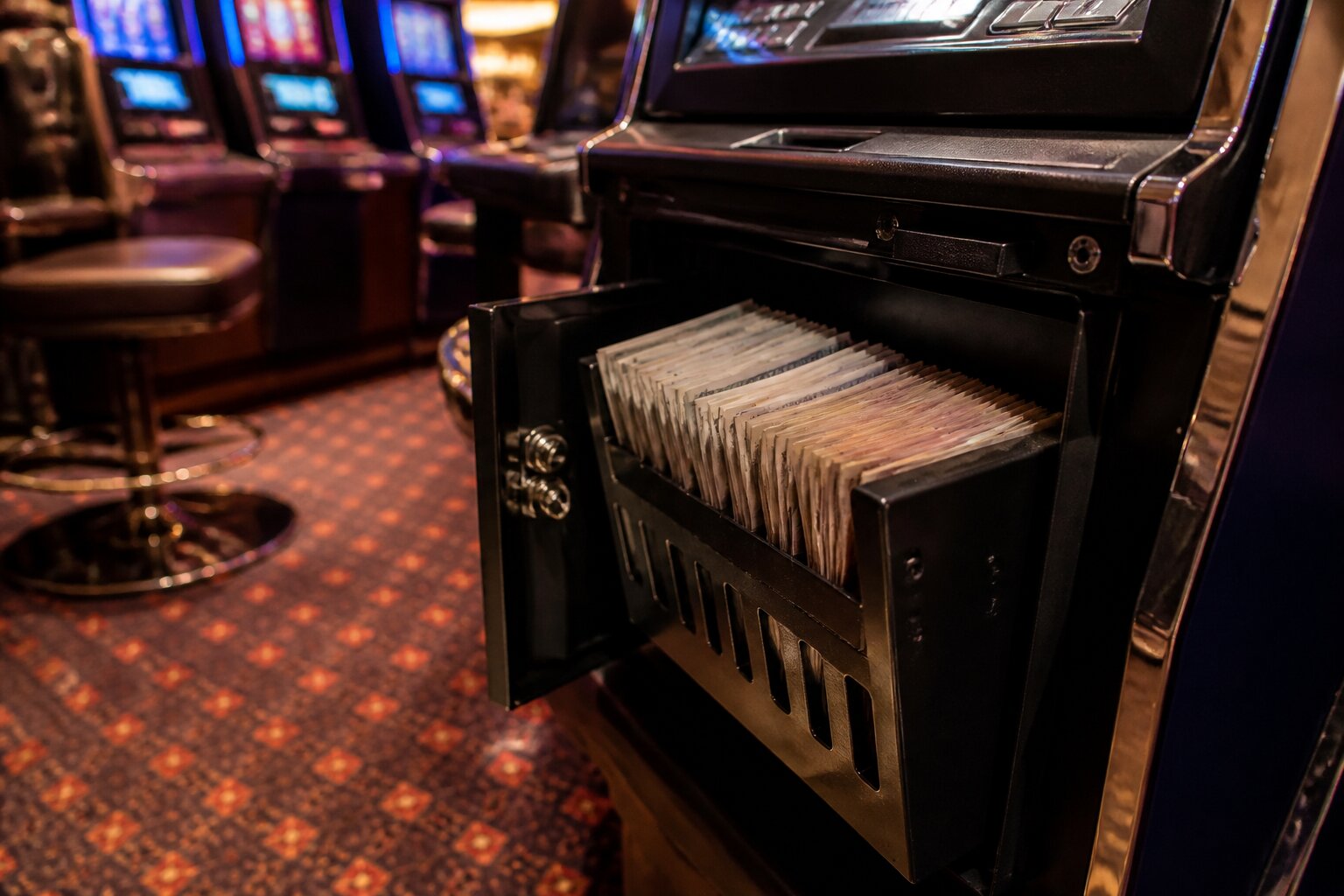
Ever glanced at a slot machine flashing away in the corner of your local arcade or casino and wondered how much cash it might contain? Stories circulate everywhere, from casual pub chat to online forums, suggesting that machines hide fortunes or are almost empty. Those tales make for good conversation, but they rarely reflect how modern machines actually work.
This article cuts through the gossip to explain what determines a machine’s physical capacity, how payouts and jackpots are managed, and which parts of the common lore are simply myths. Read on to understand the practical mechanics behind the cabinet and the systems that keep things running.
With that background in place, let’s start by looking at what actually sets a machine’s capacity.
What Determines a Slot Machine’s Capacity?
A slot machine’s capacity is shaped by a few practical factors, beginning with its physical size. Older fruit machines commonly found in pubs have compact metal cashboxes for coins and typically accept a limited number of coins before needing emptying. Those boxes might hold a few hundred to a couple of thousand £1 coins, depending on the model.
Larger casino floor machines and modern video slots have more internal space and can therefore accommodate higher volumes of cash. Many contemporary units replace coins with note acceptors or ticket systems that record value electronically, so a high player balance does not equate to a pile of cash inside the cabinet.
Technology changes the picture further. Ticket-in/ticket-out mechanisms and purely electronic credits mean the “amount inside” often refers to a digital ledger rather than physical money. That distinction matters when people assume the physical cashbox determines prizes.
Regulatory requirements also influence how much is left inside machines. Operators follow rules to secure funds and to empty devices on set schedules, and independent testing ensures that payouts align with published Return to Player figures. These technical and regulatory details help set expectations for what is literally stored inside a machine, and next we’ll examine some popular beliefs about payouts and jackpots that spring from those expectations.
Common Myths About Slot Machine Payouts & Jackpots
Many ideas about slot behaviour persist simply because they sound plausible or make for dramatic anecdotes. Two of the most persistent claims are that machines “hold back” large wins and that a jackpot can only be paid if the machine contains enough cash. Both are misunderstandings of how modern systems operate.
One widespread belief imagines a machine tracking recent wins and changing its behaviour to avoid paying out again soon. Another claims some machines are “due” to pay because they have not recently produced a big prize. These notions imply memory and cyclical behaviour, but regulated machines operate differently. Each spin or game outcome is produced by a Random Number Generator that makes every result independent. Machines do not record a hidden countdown to a future win, nor do they deliberately suppress payouts after a big win.
The idea that a jackpot depends on the cash physically present is also misplaced. Fixed and progressive jackpots are programmed into the game’s logic and paid when the conditions are met. When a very large prize is due, venue procedures ensure the player receives their win, with staff handling the necessary payment arrangements. What really governs returns is the game’s design and the tested Return to Player percentage, not the amount sitting in a cashbox.
With those myths cleared up, it’s useful to see how venues and operators actually manage the money that flows through machines.
How Are Slot Machine Funds Managed in Casinos?
Handling the cash and electronic transactions from machines is a tightly controlled operational process. In physical venues, staff empty cashboxes and note hoppers on a regular cycle. Those collections are counted, recorded and transported under supervision to reduce the risk of error or theft. Every action is logged to maintain an audit trail that regulators can review.
Modern machines add an electronic layer to this process. Transaction records for coins, notes and ticket-based credits are logged automatically, creating a digital history for each machine. These records support compliance with financial and anti-money laundering rules and make it straightforward to reconcile totals at the end of a shift.
Online games operate entirely in the digital domain, with player balances, wagers and payouts tracked in databases. Security, user verification and transaction logging are central to keeping those systems trustworthy. All of these controls are about transparency and safety; they do not influence the randomness or fairness of the games themselves. Next, we’ll look at what happens when a machine reaches its physical limits.
What Happens When a Slot Machine Becomes Full?
When a cashbox, note hopper or ticket mechanism approaches capacity, the machine is designed to respond in a clear and predictable way. The most common behaviour is to stop accepting further coins or notes and to display a message indicating service is required. Some machines lock out additional inputs until staff attend.
Staff are notified either by an on-screen alert or an electronic signal sent to the floor management system. A member of staff will attend, follow secure handling procedures to empty or replace the relevant component, record the event and return the machine to service as quickly as practical. For ticket printers or dispensers, a similar pause occurs if the paper runs low or a stack is full, and staff will resolve the issue promptly.
These safeguards aim to protect both the venue and players. The pause in accepting cash is an operational measure and has no bearing on the game’s Return to Player or the chance of a future win. With those practicalities handled, it helps to understand how the denomination you choose shapes play and capacity.
The Role of Slot Machine Denominations
Denominations describe the value attached to each credit used for a bet, and they influence how quickly a machine’s physical storage fills up. Lower-denomination machines, such as those that use 1p or 10p credits, tend to move higher volumes of coins for smaller stakes. Higher-denomination machines, which accept £1 or £2 coins or their electronic equivalents, accumulate value in fewer physical items.
Some modern video machines offer selectable denominations, allowing players to adjust the stake per spin according to their preference. That flexibility changes the rate at which a cashbox reaches capacity but does not alter the game’s Return to Player or the underlying odds.
Understanding denomination helps when choosing a machine that fits a budget and when appreciating why machines on a floor might need servicing at different intervals. If you want to compare options on a site, pick one that matches the stake levels you are comfortable with so you can play within your means.
Play Online Slots at Umbingo
We welcome you to explore our site, where you will find a wide range of online slots for every preference and playing style. With so much variety to choose from, there is something here for everyone to enjoy.
Getting started with us is easy: simply create your account, make a deposit and you can begin playing at your own pace. We look forward to having you join us for a fun and entertaining experience.
**The information provided in this blog is intended for educational purposes and should not be construed as betting advice or a guarantee of success. Always gamble responsibly.