
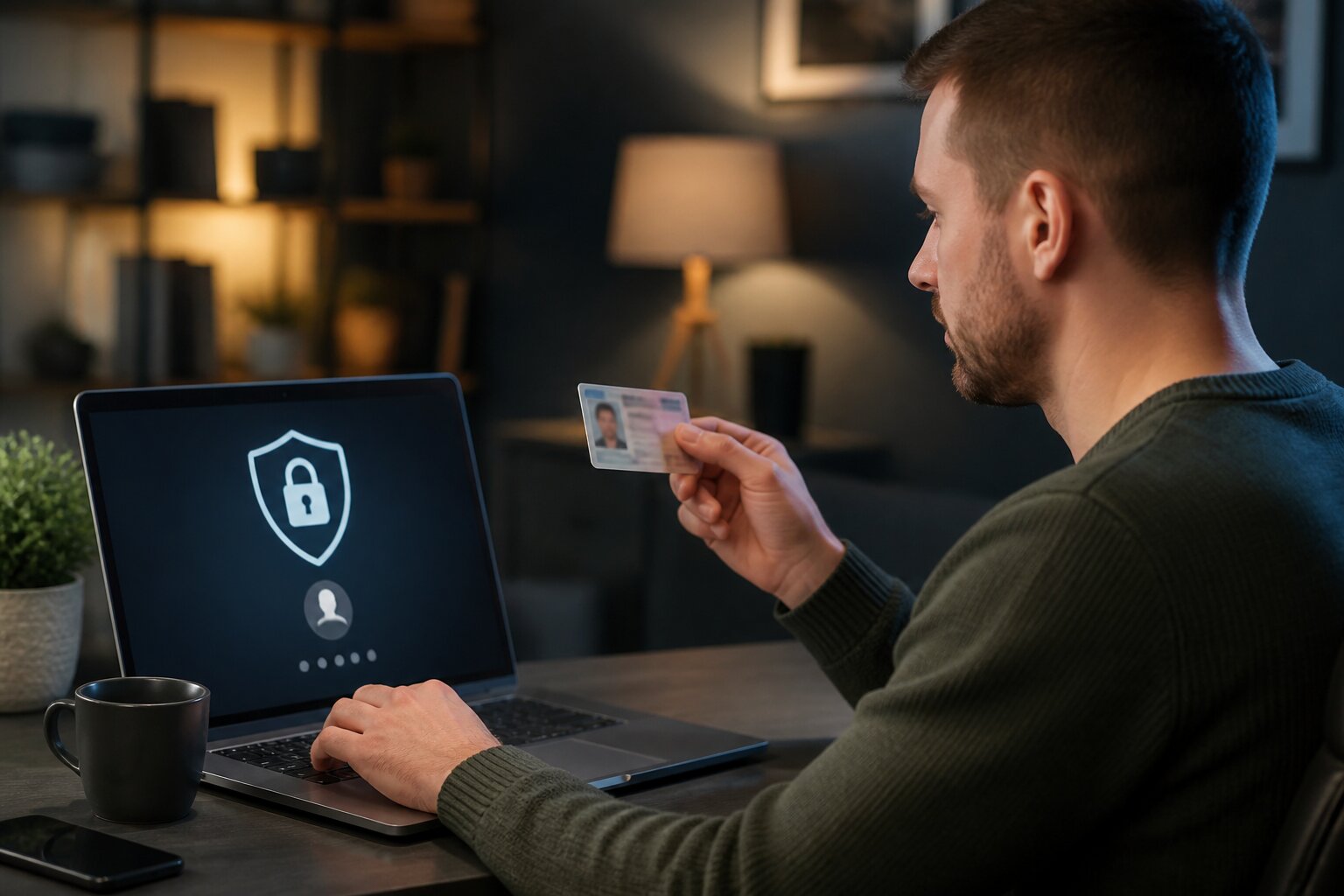
Ever wondered why you’re suddenly asked to upload your driving licence or a utility bill when you join an online casino? It can feel surprising when all you want to do is play your favourite games.
These checks are routine and serve several practical purposes that protect players and the wider platform. This article explains what verification involves, why it matters and how it affects your account — read on to get a clear picture.
Understanding Online Casino Account Verification
Account verification is a standard step when joining an online casino in the UK. As part of regulatory requirements, operators must check who their customers are before allowing deposits or real-money play.
When you create an account you supply basic personal details such as your name, date of birth and address. Some of this information is checked automatically against public records. If the automated checks do not provide a clear match, the operator will ask you to upload supporting documents, typically a photo ID and proof of address.
Verification confirms you are an adult, reduces the risk of identity theft and helps keep the platform fair for everyone. Most accounts are cleared quickly, so you can get started once the checks are complete. Next, we’ll set out the legal basis for these checks and what they require of operators.
Is It Legal For Casinos To Request Identification?
Online casinos in the UK must verify customers under rules set out by the regulator. These requirements are part of licence conditions designed to prevent underage gambling, combat money laundering and ensure fair play.
Operators are required to carry out proportionate checks and to keep records that demonstrate compliance with those licence conditions. Verification is therefore not merely a courtesy or a commercial choice but a formal obligation for any site operating within the regulatory framework.
In practice this means sites will ask customers to provide identity and address documents, and may request further information where necessary to satisfy the checks. The process should be conducted in a way that is reasonable and proportionate to the risks identified by the operator, with records retained to show the steps taken.
Protecting Players: The Importance Of ID Verification
ID checks are central to player protection. Confirming age prevents under-18s from accessing gambling services, and identity checks make it harder for criminals to use stolen or false details.
Beyond fraud prevention, knowing who is playing allows operators to identify risky behaviour and put safeguards in place when needed. Those measures might include limiting activity or offering support options to people showing signs of harm.
Taken together, these protections maintain trust in the service and help ensure all customers play in a safe, regulated environment. With that understood, the next section explains how those checks typically work in practice.
How Does The ID Verification Process Work?
Verification is designed to be quick and secure. After registration, customers may be asked to upload documents via their account area. Operators use secure systems to handle images and personal data, storing information in line with data protection requirements and retaining it only for legitimate verification purposes. The process is focused solely on confirming identity and address so the account can be used safely.
Most providers also use electronic identity checks to speed things up, comparing details against trusted databases to confirm names, addresses and dates of birth. Where a manual review is needed, the verification team will examine the documents in more detail and either approve the account or request clearer copies. Manual checks can help spot forged or altered documents and ensure a reliable outcome.
What Documents Are Accepted?
Acceptable documents usually include a passport or driving licence to prove identity and a recent utility bill or bank statement to confirm address. Documents should be clear and legible, showing the relevant name, photo and details. Photographs and scans need to be unedited and show all corners of the document to avoid delays.
Operators may set specific rules about how recent an address document must be and which types of bills are acceptable, so it is worth checking the guidance in your account area before uploading.
How Long Does Verification Take?
Many verifications complete within a few hours, particularly when electronic checks are successful and submitted images are clear. In some cases, especially where documents are unclear or extra checks are required, it can take up to 48 hours. Operators generally aim to minimise delay so you can access your account functions promptly.
If further information is needed, you will normally be informed and given instructions on providing the required documents. Any additional time taken is usually to ensure compliance and to protect both the customer and the operator.
What Happens If Verification Fails?
If a document does not meet the requirements, the operator will explain what is missing and request a replacement. Support teams are available to guide you through the requirements and help resolve issues so your account can be verified. In some cases, alternative documents or a secondary check may be offered to complete the process.
Repeated failures may result in temporary restrictions while the account is reviewed, but operators will generally aim to communicate clearly about next steps and how to provide acceptable evidence.
Understanding how verification works helps make the process less frustrating. Next, we will look at the wider role these checks play in reducing fraud and preventing financial crime.
Preventing Fraud & Money Laundering Online
Licensed operators have a legal duty to reduce fraud and prevent money laundering, and identity checks are a key part of that defence. Verifying who is behind each account makes it much harder for stolen identities or illicit funds to be used.
Checks on the source of funds and monitoring of transactions work alongside ID verification to spot unusual patterns. When concerns arise, operators follow procedures to investigate and take appropriate action, protecting both individuals and the integrity of the service.
Strong verification and transaction monitoring contribute to a safer environment for everyone. With that security in place, it is sensible to check how your personal data is handled.
Are My Personal Details Safe With Online Casinos?
Protecting personal information is a priority for operators working under UK data rules. Identification documents and other sensitive details are processed in line with data protection legislation and only used for verification and regulatory purposes.
Encryption and secure storage are standard, limiting access to authorised personnel involved in identity checks. Personal data is not shared or sold for unrelated purposes. These safeguards are designed to keep your information private while enabling necessary checks.
Knowing how data is protected can make the verification process feel less intrusive. The next section clears up some common misconceptions about ID checks so you know what to expect.
Common Myths About ID Checks At Online Casinos
Several myths surround ID checks. One is that they are only used to delay withdrawals or target particular customers. In reality, checks are applied to meet regulatory obligations and to secure the service as a whole.
Another misconception is that being asked for ID implies wrongdoing. All customers can expect verification; it is a standard step rather than an accusation. Finally, some people think checks are unnecessary. In fact, they work alongside other controls to prevent fraud and protect vulnerable players.
Clearing up these misunderstandings helps set realistic expectations about why and how checks take place. If you still decide not to submit documents, the next section explains the consequences.
What Happens If I Refuse To Provide ID?
If the requested documents are not supplied, operators cannot lawfully permit real-money play, deposits or withdrawals. Access to these functions will remain restricted until verification is complete, and you will not be able to use the full range of services on the site.
In practice this means your account may be placed in a restricted or suspended state while verification is outstanding. You will not be able to add funds, wager with real money or request withdrawals. Any pending withdrawal requests may be delayed or put on hold until the necessary checks are carried out.
This policy is not punitive but a legal requirement intended to protect customers and ensure the activity on the platform is legitimate. Operators are required to carry out identity and source-of-funds checks under anti-money laundering and safer gambling rules, and those checks cannot be completed without the documents requested.
If you persistently refuse to provide ID, the operator may ultimately close your account in line with their terms and conditions, and may cancel outstanding transactions if they cannot be verified. In cases where activity appears suspicious, the operator may also be required to report relevant information to the appropriate authorities. Any actions taken will follow the operator’s published procedures and regulatory obligations.
If you have concerns about providing documents it is usually best to contact customer support. They can explain why each document is needed, how it will be handled and stored, and the steps you can take to complete verification so normal account functions can be restored.
Tips For A Smooth Verification Experience
A few straightforward steps make verification faster and less frustrating. Use current documents that clearly display all required details and ensure images are well lit and in focus. If a document has important information on both sides, include both images.
Make sure the details you submit match the name, date of birth and address you used to register. Respond promptly if an operator asks for clearer copies, and contact customer support if you need help uploading files or understanding what is required.
Following these simple precautions reduces delays and helps the verification team complete checks quickly. These practical steps allow you to move on from compliance formalities to the parts of the site you want to use.
To finish, verification exists to keep the service lawful, fair and secure for everyone; supplying clear, up-to-date documents makes the process quick and straightforward so you can access your account with confidence.
**The information provided in this blog is intended for educational purposes and should not be construed as betting advice or a guarantee of success. Always gamble responsibly.