
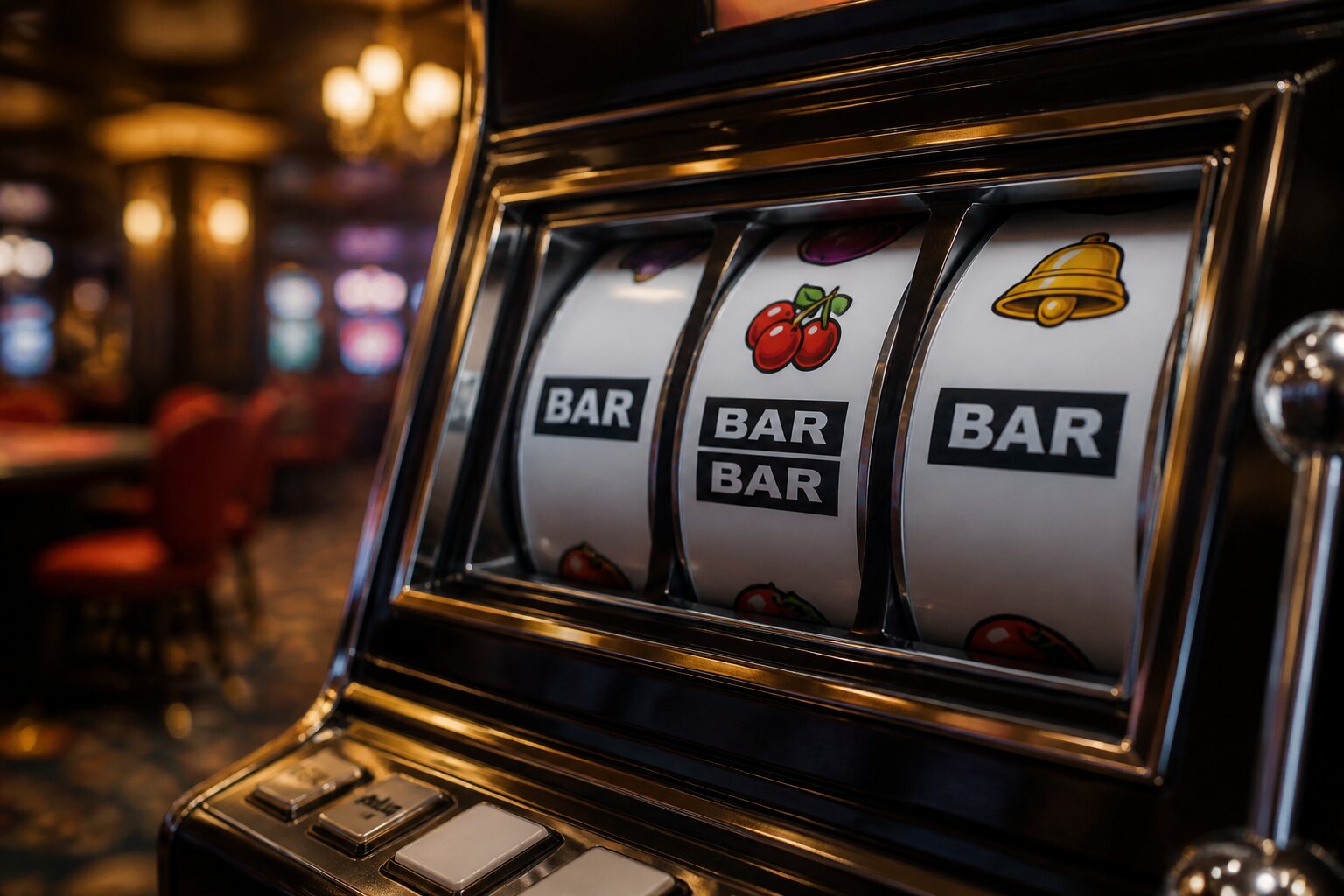
Have you ever been playing slots and wondered why so many machines feature those mysterious "BAR" symbols spinning on the reels? You're not alone. That simple word is one of the most recognisable sights across classic fruit machines and modern video slots.
Its story stretches back to the beginnings of commercial slot machines and touches on branding, practical design and the evolution from chewing gum prizes to cash payouts. If you want to know where BAR came from, what single, double and triple BARs mean, and why the symbol still appears today, keep reading — the history and mechanics are more interesting than they first seem.
What Do BAR Symbols Represent?
BAR symbols are a longstanding reel icon that signal a particular prize or payout within a game. Much like cherries or sevens, a BAR is one of the images used to form winning combinations as defined by each slot’s paytable. It does not denote a special in-game mechanic by itself; its role is to be a clear, recognisable marker on the reel that maps to a declared prize.
Games often vary this symbol to create more gradations of payout — single, double and triple BARs provide straightforward visual cues about which combinations pay more. In modern slots the BAR serves the same basic function as any other symbol: to help the player identify outcomes quickly and to support the game’s visual theme.
Origins of the BAR Symbol in Slot Machines
The BAR symbol is rooted in the early era of slot machine manufacturing and reflects practical decisions by makers and distributors. The Liberty Bell, built by Charles Fey in the late 1800s, established the basic template for using pictorial symbols to indicate wins. Those first machines used icons like horseshoes, stars and the bell itself so players could quickly see whether they had a payout.
When the Bell-Fruit Gum Company entered the market, they substituted cash prizes with fruit-flavoured chewing gum. To reflect the product, symbols such as cherries, lemons and plums were added to the reels. The BAR symbol arrived as a stylised company logo — a simple rectangular mark that became a native reel image. Initially it signified a particular gum prize, but as machines returned to dispensing cash, the symbol persisted as a conventional payout icon.
This origin explains why BARs often sit alongside fruit symbols on reels: both types emerged from the same commercial period and remain part of the visual language of slots.
The Liberty Bell and Early Slot Machine Symbols
The Liberty Bell created the template for symbol-based payouts: icons that were easy to distinguish at a glance. Early symbols focused on recognisability rather than thematic depth, which made them effective on mechanical reels and later screens. That same need for clear imagery is why many modern games still favour simple shapes like BARs.
The Role of Fruit and BAR Symbols in Payouts
As manufacturers shifted from gum to cash rewards, the fruit and BAR icons kept their place because they already communicated prize types clearly. Over time the BAR transformed from brand logo to conventional symbol, and today it retains that dual heritage of commercial origin and practical visibility on reels. The next section looks at why designers keep using it long after its original purpose faded.
Why Are BAR Symbols Still Used Today?
Designers keep BAR symbols because they carry immediate recognition and lend a sense of continuity with the earliest slot machines. For players, BARs function as visual shorthand: they look familiar, read well on a crowded reel, and link modern electronic titles with the physical machines that came before.
Beyond nostalgia, BAR symbols work well in contemporary game design because they are simple and versatile. They slot easily into a paytable alongside fruit and number symbols, and their stacked variations — single, double, triple — supply a neat way to scale payouts without adding complexity to play. That clarity is valuable whether a game aims for a classic fruit-machine feel or a retro-styled video slot. Read on to see how those stacked BARs are used to build payout structure.
Is There a Special Meaning Behind Single, Double, and Triple BARs?
Single, double and triple BARs are variations that expand the number of distinct outcomes a game can offer. Visually they are represented by one, two or three horizontal bars and are mapped in the paytable to different prize levels. Generally, three of the same BAR will pay according to the tier assigned — for example, three single BARs might yield a modest return while three triple BARs are placed higher in the paytable.
This layered approach gives designers a simple way to differentiate outcomes and shape player expectations without altering the fundamental mechanics of the spin. The stacked BARs also preserve a consistent, easily readable look across mechanical and digital formats, keeping the reels comprehensible at a glance. The following section compares BARs with other familiar reel symbols to show how they sit within broader slot design.
Comparing BAR Symbols to Other Common Reels Symbols
BARs form part of a family of classic symbols that includes a range of fruit icons and numerical symbols such as sevens. Fruit images originally reflected the chewing-gum prizes and introduced colour and variety to reels. Sevens developed as another widely used numeric symbol associated with higher paytable positions.
Compared with theme-driven symbols in many modern video slots — gemstones, artefacts or branded imagery — BARs and fruit symbols are utilitarian. Their purpose is clarity and instant recognition rather than narrative detail. That simplicity helps machines remain readable and approachable, which is why these older icons still appear even in games that otherwise adopt contemporary graphics and features. The next section explains how these appearances interact with a game’s mechanics and what they do not change.
Do BAR Symbols Affect Winning or Gameplay?
BAR symbols do not influence the underlying mechanics of a slot. Outcomes are controlled by a random number generator (RNG), which assigns results independently of previous spins and without regard to which symbols are visible on the reels. Symbols such as BARs are elements of the game’s presentation and payout mapping, not modifiers of probability.
All prize values and combinations are set out in the paytable, so players can see exactly what each symbol combination awards. In short, the presence of BARs tells you about the visual and payout structure of a slot but does not change how the RNG determines outcomes. While the visuals help you interpret results, the mechanics of the game remain governed by the programmed rules.
Debunking Myths About the BAR Symbol
A few persistent misconceptions follow the BAR symbol. One is the idea that BARs somehow increase the chance of a higher payment or indicate a machine that will pay out more frequently. In practice, symbols perform only as defined by the paytable; they do not alter the random nature of spin outcomes.
Another myth is that a machine showing certain BAR patterns is primed to award a bonus or hidden prize. Any special rules, bonus rounds or feature triggers will be explicitly described in the game information; symbols do not conceal secret mechanics. Clearing up these misunderstandings helps keep expectations realistic and supports sensible play. The closing section reflects on why BAR endures as a symbol and how that links to players’ experience.
Conclusion: The Enduring Appeal of the BAR Symbol on Slots
The BAR symbol endures because it is simple, recognisable and rooted in the commercial history of slot machines. From a company logo on candy-dispensing devices to a staple of contemporary reels, BARs have become part of the visual vocabulary that defines classic slot design.
They coexist with fruit and sevens to create readable paytables and maintain continuity between mechanical and digital games. While BARs contribute character and clarity, they do not affect how a game operates; outcomes are determined by the game’s rules and RNG. Enjoying slots is best achieved by understanding those mechanics, setting sensible limits, and treating play as entertainment. The BAR’s lasting appeal is its blend of heritage and function — a small symbol with a long history that still helps players make sense of the reels.
**The information provided in this blog is intended for educational purposes and should not be construed as betting advice or a guarantee of success. Always gamble responsibly.