
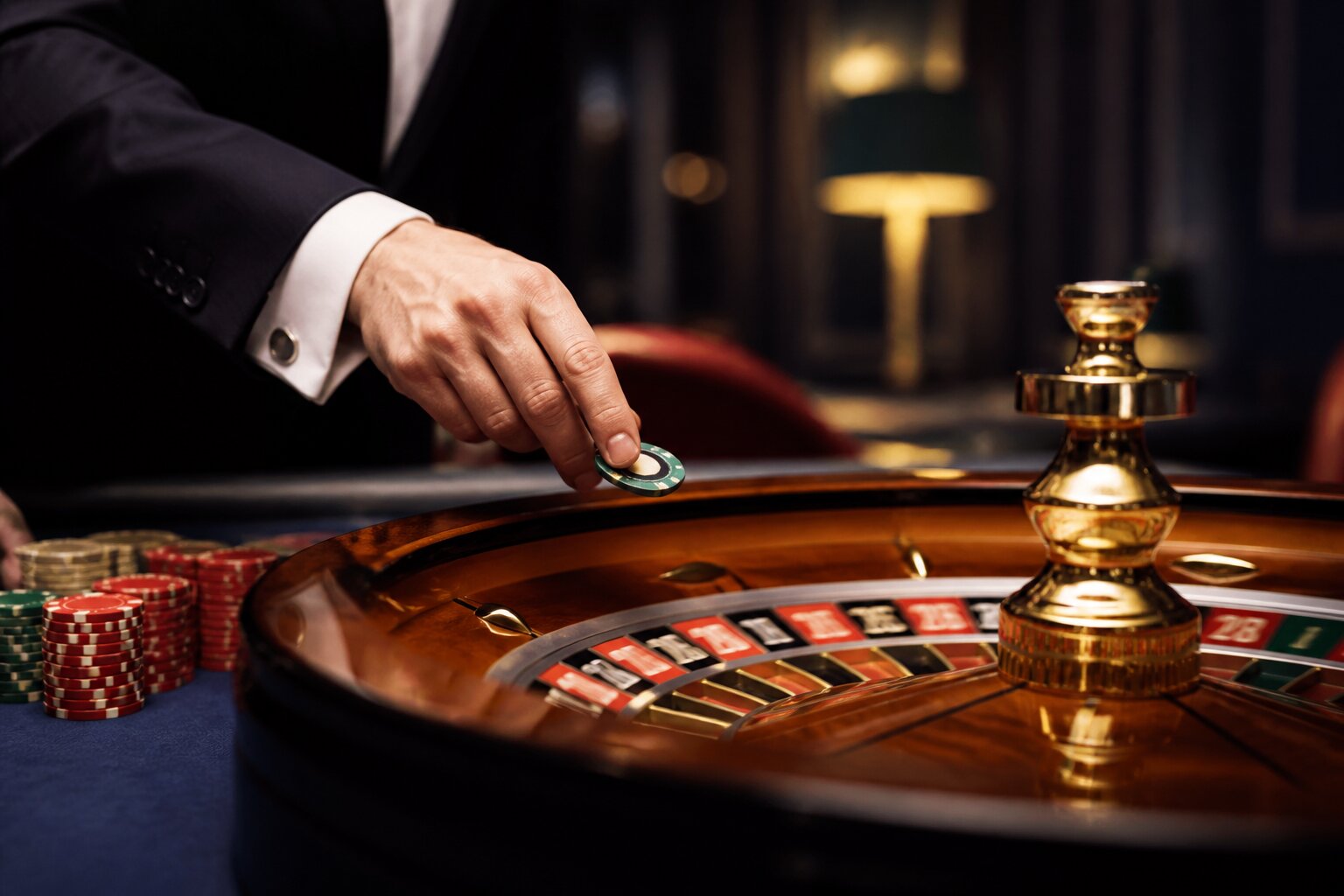
Zero on the roulette wheel is a small pocket with an outsized reputation. Many players focus on reds, blacks, odds and evens, so the green zero can feel like a quiet surprise when it turns up.
Understanding when and why to place a bet on zero can make your spins more interesting. With distinct odds and a clear effect on the house edge, zero is worth knowing about even if you only use it occasionally.
Before you place your next chip, read on for a clear explanation of how zero works, what it pays, and sensible ways to include it in your play.
Understanding How Roulette Works
Roulette is a straightforward table game built around a spinning wheel and a small ball. The wheel contains numbered pockets—usually 1 to 36 split between red and black—plus a green pocket for zero. In European roulette there is one zero; American roulette adds a double zero.
The table layout mirrors the wheel and offers many betting options: single-number bets, groups of numbers, and outside bets that cover large sections of the wheel such as red/black or 1–18/19–36. Straight-up bets on a single number, such as zero, deliver the highest payout but cover the fewest outcomes.
Each type of bet has fixed odds and a matching payout structure. That relationship between chance and payout is what determines the house edge, which applies across the table regardless of the bet you choose.
What Are the Odds of Zero in Roulette?
Zero occupies one pocket on a European wheel, so there are 37 pockets in total. That gives zero a probability of 1 in 37 per spin, which is roughly 2.7%.
On an American wheel there are 38 pockets, so the probability for the single zero is 1 in 38, about 2.63%. Many American wheels also include a double zero which changes the overall house edge, but the chance of the single zero itself remains 1 in 38 on those wheels.
Those probabilities are fixed by the wheel’s layout and remain the same from spin to spin. Past results do not change future probabilities; each spin is independent and governed by the wheel’s design and the physics of the spin.
Understanding these fixed probabilities helps set realistic expectations for how often zero will appear over many spins. It also explains why zero is important to the house edge: because zero is neither red nor black and does not belong to most outside bet categories, its presence slightly reduces the long-term return to players.
How Does the House Edge Impact Zero Bets?
The house edge comes from the difference between true probabilities and the payouts offered. In European roulette, the single zero produces a house edge of 2.7%. In American roulette, the extra double zero raises that edge to 5.26%.
That edge affects every bet on the table, including straight-up bets on zero. Payouts—such as 35 to 1 for a single-number win—are set to reflect the low probability of a single pocket, and the house edge remains the underlying long-term advantage for the casino.
Knowing the house edge tells you how to compare different tables and formats. Choosing a variant with a lower edge gives slightly better expected returns over many spins.
Is Betting on Zero Worth It?
Betting on zero can be appealing because it’s less frequently selected by players and it has a high single-number payout. But it’s important to treat it as a high-risk, high-reward option: the probability of winning on zero is low, and losing streaks are common.
A straight-up zero bet offers the same payout as any other single number and the same underlying probability defined earlier. There is no statistical benefit to selecting zero over any other straight number. If you enjoy the occasional single-number punt because of the potential payoff, that’s a valid style of play; just expect the frequency of wins to match the probability.
Myths About Betting on Zero
Two persistent misconceptions come up around zero. First, the idea that a number is "due" after a long absence is incorrect: prior spins do not influence future probabilities. Second, zero is not intrinsically a better pick than other single numbers—the payout and probability align as they do for every straight-up bet.
Players sometimes look for patterns on previous results. While visualising past spins can be entertaining, it does not change the probabilities already set by the wheel. Treat myths as part of the game’s folklore rather than as a guide to decision-making.
Tips for Managing Your Bets on Zero
If you include zero in your betting mix, approach it with a clear plan. Decide in advance how much of your bankroll you are willing to allocate to single-number bets, and spread that amount across your session to avoid rapid depletion.
Keep zero bets proportionate to your wider play rather than concentrating too much of your stake on a single spin. It can be useful to alternate between outside bets that cover many numbers and occasional single-number bets if you want variety without taking on constant high-risk plays.
Take regular pauses during a session to reassess your balance and enjoyment. If the session is no longer enjoyable or is exceeding your limits, step away. There are also support services available if you ever need them.
How Do Payouts for Zero Compare to Other Numbers?
A winning straight-up bet on zero pays 35 to 1, the same payout any single-number win receives. For example, a £1 win on zero returns £35 in winnings plus the original £1 stake.
Other bet types trade frequency for smaller returns. Outside bets such as red/black or odd/even cover many numbers and pay 1 to 1, so wins occur more often but return less per stake. The choice between frequent small wins and infrequent larger ones is a matter of personal preference and bankroll management.
Remember that equal payouts for single numbers reflect equal mathematical treatment: picking zero does not give a greater expected return than picking any other single number.
Choosing the Best Type of Roulette Table for Zero Bets
When placing zero bets, the table variant matters. A European table with one zero offers a lower house edge than an American table with both zero and double zero, which means slightly better expected outcomes on single-number bets.
Some tables include rules such as La Partage or En Prison that affect certain outside-bet losses when zero appears. Those rules can reduce the effective loss on qualifying bets, but they do not change the basic probabilities for a straight-up zero bet.
Selecting a table with a lower house edge or favourable rules is the most practical way to improve the mathematical terms of your play when you want to bet on zero.
Key Takeaways for Betting on Zero
Zero can add variety and excitement to roulette, but it is a high-risk option with low probability and a payout structured to match that rarity. Keep these points in mind:
The Odds and Payouts Are Fixed
Probabilities for zero are determined by the wheel type and remain constant. Payouts for single-number bets are standard across the table.
House Edge Is Always Present
The casino's edge stems from the payout structure versus true probabilities. Choosing tables with a lower house edge improves expected returns over many spins.
Keep Control of Your Play
If you enjoy betting on zero, do so in moderation and within the limits you set for yourself. Monitor your bankroll, pause when you need to, and use available support if you ever feel out of control.
**The information provided in this blog is intended for educational purposes and should not be construed as betting advice or a guarantee of success. Always gamble responsibly.