
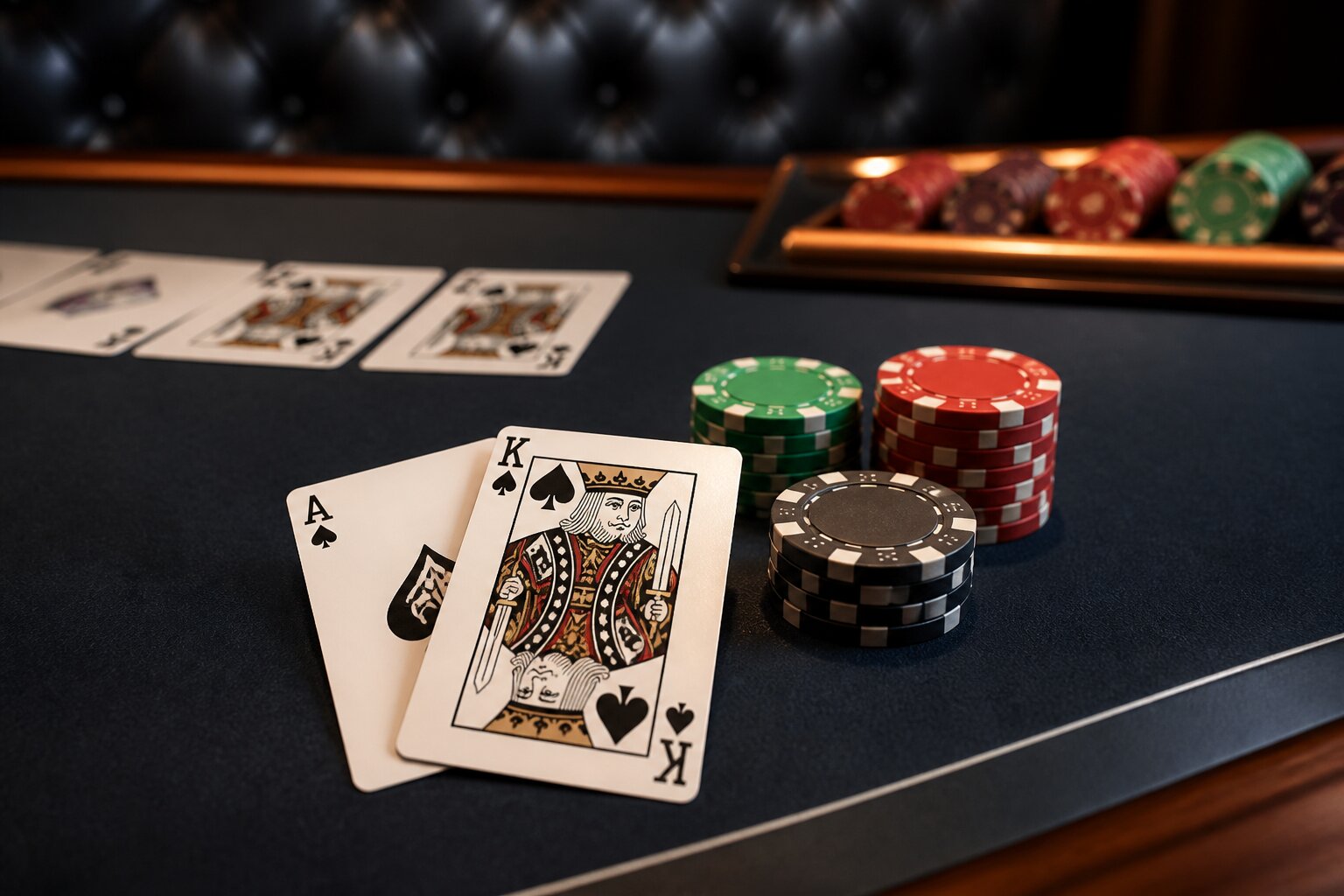
Ever wanted a poker-style twist on a blackjack round? The 21+3 side bet adds just that: it creates a separate, quick way to win based on the first three cards seen on a hand. Suited Trips is the rarest and highest-paying result, and knowing how it works and how likely it is can help you decide whether to take the extra wager.
This article walks through the mechanics, payouts and probabilities of Suited Trips, clears up common misunderstandings, and explains where you’ll typically find the 21+3 option in the UK. Read on to get the full picture before you consider placing the side bet.
What Is the 21+3 Side Bet in Blackjack?
The 21+3 side bet is an optional wager placed alongside your main blackjack stake before cards are dealt. It looks at a three-card poker-style combination formed from your two initial cards plus the dealer’s face-up card. If those three cards match one of the qualifying hands, you receive a separate payout regardless of how the main blackjack hand later resolves.
Qualifying hands are modelled on familiar poker hands—examples include three of a kind, straights and flushes—with each outcome carrying its own fixed payout. Because the bet is independent of the blackjack result, you can win or lose the side bet even while your main hand wins or loses.
The 21+3 market exists mainly to add a short, distinct thrill to a round; it is completely optional and aimed at players who want an extra stake on the same deal. In UK casinos these games are operated under regulation, so check for a regulated operator if you want to confirm fair play.
How Does the Suited Trips Payout Work?
Suited Trips pays out when the three relevant cards are all the same rank and the same suit—such as three Queens of hearts. This is the top-paying outcome for the 21+3 wager and therefore carries the largest fixed payout.
Most tables and online implementations offer a payout around 100 to 1 for Suited Trips, so a £1 side bet would typically return £100 plus your stake. Payout schedules can vary slightly between casinos and game variants, so it’s worth checking the table rules before betting.
Because the payout is high, the Suited Trips outcome is intentionally rare by design. That rarity is reflected in the payout structure for the other qualifying hands too: the more common hands pay less, and the less common hands pay more.
What Are the Odds of Hitting Suited Trips?
The probability of Suited Trips is extremely low, particularly in games that use multiple decks. In many standard multi-deck blackjack setups the chance is roughly 0.01% — about 1 in 5,000 three-card combinations. Exact figures depend on the number of decks in play and the specific rules of the game, but the point remains the same: this is a long-shot outcome.
Other 21+3 hands present markedly higher chances and therefore lower payouts. For example, three-of-a-kind without the suit requirement, straights and flushes occur more often and are priced accordingly. Those differences explain why Suited Trips stands out: it pays well because it happens very infrequently.
If you want to compare probabilities precisely, look for the paytable and model the three-card combinations given the deck count used at that table. That gives a clear, mathematical sense of how often each side-bet result can occur.
Probability Compared to Other Side Bets
Compared with other common casino side bets or optional wagers, 21+3 tends to offer smaller long-term returns to the player because the house edge on side bets is generally higher than on the main blackjack game. That’s why players who prefer consistent, long-run advantage tend to concentrate on the main hand, while those seeking occasional big payouts sometimes include the side bet for variety.
Understanding Suits and Trips in This Context
A suit refers to the four categories in a standard deck: hearts, diamonds, clubs and spades. “Trips” is shorthand for three of a kind—three cards of the same rank. For Suited Trips both conditions must be met: each of the three cards must share the same rank and also the same suit.
Because many casinos use multiple decks, it is possible for the three required cards to appear even though a single physical deck contains only one card of a particular rank and suit. That multi-deck detail is important: it makes Suited Trips feasible but still rare.
To illustrate, imagine you receive a Jack of spades and a Jack of spades is also the dealer’s upcard in a multi-deck game; together those three Jacks of spades would constitute Suited Trips. The requirement for both rank and suit is what makes this combination stand out among 21+3 results.
Common Myths About 21+3 Side Bets Debunked
There are several recurring misunderstandings about the 21+3 wager that are worth clearing up.
One is the idea that patterns, betting systems or observing prior hands can increase your chance of success. In reality, each deal is independent and the three-card combination is determined solely by the shuffle and the number of decks in play. Another myth is that a side bet is “due” to pay after a long losing stretch—there’s no statistical mechanism that makes an outcome more likely because it hasn’t occurred recently.
Finally, while some players assume every casino uses the same paytable for 21+3, paytables vary and that affects both the payouts and the long-term expected return. Always check the site or table rules so you know the exact payouts and can compare the value of the side bet against other wagering options.
Can You Play 21+3 in UK Casinos?
The 21+3 side bet is commonly available in UK casinos, found at many online tables and at a number of land-based venues. The game’s availability depends on the operator and the particular table variant, so it’s worth scanning the table layout or game lobby to find the option.
In the UK, regulated operators must use games that meet regulatory standards for fairness and transparency. Before playing, you can confirm that a casino is regulated and review the specific paytable for the 21+3 bet so you understand the payouts and the deck configuration used.
If you’re unsure whether a provider meets regulatory standards, look for clear licensing information in the casino’s help or about pages. That helps ensure the side bet you play behaves as advertised and gives you confidence in the game’s integrity.
Is the 21+3 Side Bet Worth It?
Deciding whether the 21+3 side bet is worth playing depends on what you want from the game. If you value occasional high payouts and the extra excitement of a separate wager, the side bet can add an attractive dimension to a session. If your priority is the best long-term return, the main blackjack game generally offers better mathematical value for the player.
Because the house edge on side bets tends to be higher, regular reliance on them is unlikely to improve your overall return. Many players treat 21+3 as an occasional, optional stake—something to enjoy when the potential payout is appealing and the amount staked is modest relative to their bankroll.
If you choose to play the side bet, limit it to a level that fits your budget and goals so it remains an occasional, entertaining feature rather than a steady expense. That way you keep control over how much you’re risking while still enjoying the added variety.
Conclusion: Making Sense of Suited Trips in Blackjack
Suited Trips is the top prize in the 21+3 side bet: a rare, clearly defined three-card combination that returns a high payout when it appears. Understanding the payout structure, how the probability changes with deck count, and the variation in paytables helps you make an informed choice about whether to place this optional wager.
The side bet is best treated as supplementary entertainment rather than a regular way to improve returns. If you do play it, keep stakes sensible and check the specific paytable at the table you’re using. For further information on staying in control or finding support, consult recognised responsible gambling resources such as BeGambleAware.
**The information provided in this blog is intended for educational purposes and should not be construed as betting advice or a guarantee of success. Always gamble responsibly.