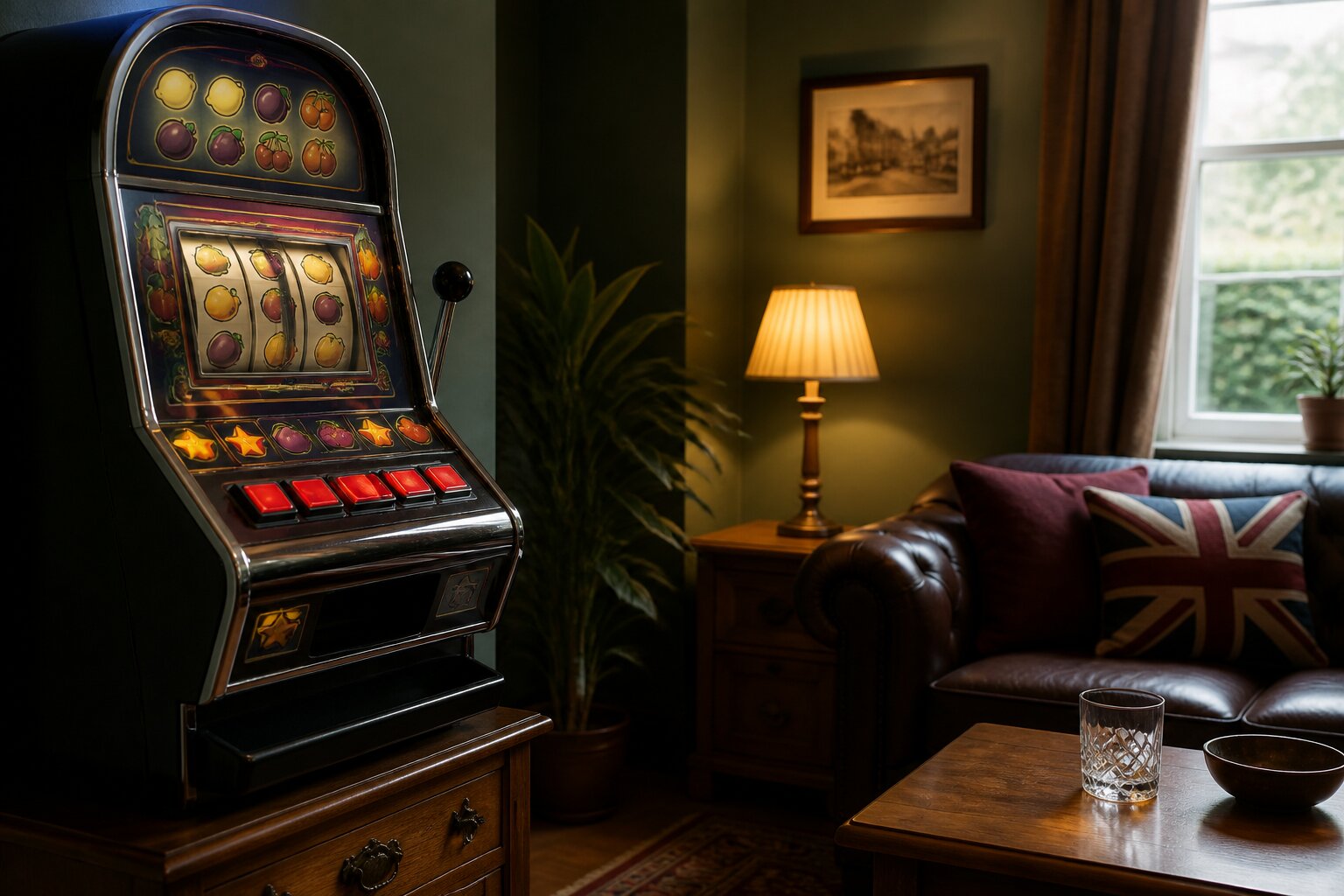
Imagine walking into your living room after a long day and seeing your very own seaside arcade or local pub into your home. The lights flash, the reels spin and it almost feels like you’ve brought the seaside arcade or local pub into your home. It’s an appealing idea—whether you want a nostalgic conversation piece or a feature in a games room.
Before you bring one inside, it helps to know the legal lines that separate private ownership from regulated gambling activity. The rules focus on how machines are used, who can access them and whether money changes hands.
Read on for a clear guide to what’s allowed, what to avoid and the practical steps to keep a machine in your home without falling foul of the law.
Understanding Slot & Fruit Machines: What Are They?
Slot machines and fruit machines are gambling devices that provide entertainment through chance-based game outcomes, where players stake money for the possibility of winning prizes. They’re recognised by spinning reels, lights and sound effects; classic fruit machines display symbols such as cherries, lemons, bars and bells across three or more reels.
Modern slot machines expand on that format with themed graphics, bonus rounds and video screens, while pub fruit machines tend to have simpler feature sets and legally limited jackpots. Under the hood, outcomes are determined by a random number generator (RNG), which ensures results cannot be predicted or influenced by a player.
Many machines also include small skill elements such as nudges or holds on older pub models, but these features do not replace the machine’s fundamental reliance on chance-based mechanics. The practical difference most owners notice is how payout limits and permitted settings vary between machines designed for pubs, arcades and casinos—details that will matter when you consider owning one at home. The following section explains the legal framework that governs these distinctions.
UK Laws on Owning Slot and Fruit Machines at Home
The Gambling Act 2005 is the primary legislation covering slot and fruit machines in the UK. It permits private individuals to own such a machine for personal, non-commercial use, but it draws clear boundaries around any activity that resembles a gambling business.
Private ownership is acceptable when the machine is kept for personal amusement, collecting or display. It becomes unlawful if the device is used to generate profit, operated as part of a business, or made available to the public to play for money without the appropriate licence. Unlicensed commercial use attracts significant penalties.
Some machines may be classed in higher regulatory categories if they can offer large payouts or have particular technical capabilities; those could require licensing even if kept privately. Local authorities and the Gambling Commission provide guidance on machine categories, so it’s sensible to check the status of a specific model before making a purchase.
Age restrictions and measures to prevent under-18 access apply to functional gambling devices, and owners must ensure their use does not turn into a source of income or promotion of gambling outside the household. The next section goes into the practical rules that apply to everyday private use.
Rules for Private Use: What Is Allowed?
If a machine is for private amusement, the law expects owners to keep usage non-commercial, age-appropriate and safe. That simple principle shapes several practical rules.
Do You Need a Licence for a Home Slot Machine?
A licence is not required for a slot or fruit machine that is genuinely for private use in your home. This means the device is played by you, your household or invited guests without money changing hands beyond the initial purchase. Once the machine is operated in a way that resembles a business—charging for play, taking a share of stakes, or making it available to the public—the situation moves into regulated territory and a licence would be required.
Some machines, particularly older or professional-grade models able to pay larger sums, can fall into classifications that attract regulatory control even when privately owned. Checking a machine’s category with the relevant authority avoids surprises and ensures compliance.
Are There Age Restrictions for Owning or Using One at Home?
Only adults aged 18 or over may legally buy, own or use a real slot or fruit machine in the UK. Owners are responsible for preventing access by under-18s if the machine is functional, because exposure to gambling-like activity at a young age is regulated against.
Practical measures include keeping the device in a locked room, switching it to a non-functioning display mode when children are present, or securing it so it cannot be operated by minors. These sensible steps help meet legal expectations and reduce the risk that the machine encourages gambling behaviour among younger household members.
With these rules in mind, the next section explains what to consider when buying, selling or moving a machine.
Buying, Selling & Transporting Machines Privately
Private transactions involving slot and fruit machines are permitted between adults, but both buyer and seller must ensure the machine is intended for lawful private use. Sellers should check the buyer is 18 or over and avoid knowingly supplying machines to anyone who plans to operate them commercially or in a public setting.
When buying, prefer sellers who can provide documentation such as receipts or maintenance records; these demonstrate legitimate ownership and a non-commercial history. Transporting heavy or vintage machines safely often requires a professional mover or a reputable courier familiar with fragile, heavy items. Keeping proof of purchase and clear communication about the intended private use helps if any questions arise later.
Avoid engaging with sellers who suggest bypassing regulations or repurposing the machine for unlicensed public use. If there is any doubt about a machine’s classification or legality, seek guidance from your local authority. Next, we look at the consequences of not following the rules.
Penalties for Breaking the Law
Enforcement of gambling laws is robust, and penalties for misuse of slot and fruit machines are significant. Outcomes vary depending on the nature and severity of the offence.
Heavy fines are commonly applied and can reach several thousand pounds for serious breaches. Authorities may seize and destroy machines used unlawfully, removing the device from the owner permanently. Criminal charges and prosecution are possible for repeat or serious offences, carrying the risk of a criminal record and related consequences.
Businesses found operating illegal machines can face licence revocation, forced closure or other regulatory sanctions. Civil penalties such as compliance notices, investigations and formal warnings are also used to bring operators back into line.
These penalties reflect the aim of protecting the public and ensuring machines are not used to exploit players or circumvent licensing. With enforcement in mind, the following section explains how the law treats playing for money at home.
Can You Play for Money at Home?
The law draws a clear line between private, informal amusement and gambling that involves money. Using a machine casually at home by household members for their own entertainment is generally acceptable. Once money, entry fees or prizes are introduced, or people from outside the immediate household take part, legal obligations become stricter and different rules apply.
Are Home Slot Machines Allowed to Pay Out Real Winnings?
A machine kept at home can be technically able to pay out, but allowing others to play for cash or prizes usually creates an unlicensed gambling activity. This is particularly the case when there is any organiser profit, an entry fee, or a share of stakes being taken. Operating in that way is typically not permitted under gambling regulations.
Home owners may play a machine themselves and receive small payouts personally without drawing regulatory attention, provided the activity remains casual and within the household. Running events that resemble a commercial or club-style gaming night, where players pay to enter and prizes or profits are involved, would generally require proper licensing and adherence to the relevant rules.
Does Home Gambling Need to Be Reported or Regulated?
Occasional, informal play within the household does not normally need to be reported to authorities. However, if play becomes frequent, organised, or involves monetary prizes and payments from people outside the home, licensing requirements can be triggered. Such activity can also create tax considerations and potential reporting obligations.
When an activity starts to look organised or business-like, the legal framework changes and owners should seek formal guidance to ensure compliance with gambling law and tax rules. Understanding where the line is between casual amusement and regulated gambling helps clarify what is safe to do at home; the final section summarises the essentials you should keep in mind.
The Bottom Line: UK Home Slot Machine Laws Demystified
Owning a slot or fruit machine at home in the UK is lawful when it remains for private enjoyment and does not become a vehicle for unlicensed gambling. Key points to remember are:
- Private use only: machines must be for personal entertainment, not for commercial gain or public play.
- No unlicensed public gambling: charging for play, taking a cut of stakes, or operating machines in public places is illegal.
- Licence not normally required: a licence is unnecessary for a machine used solely within a household by adults.
- Age restrictions: only those aged 18 and over should buy, own or operate functional gambling machines; keep them out of reach of minors.
- Responsible ownership: store and operate machines so they cannot be used by under-18s or turned into an income source.
- Legal transactions and transport: carry out due diligence when buying, selling or moving machines and retain purchase records.
Follow these rules and you can enjoy a classic machine at home without legal trouble. If there’s any uncertainty about a particular model or intended use, checking with local regulatory guidance will clarify whether a licence or additional steps are needed.
**The information provided in this blog is intended for educational purposes and should not be construed as betting advice or a guarantee of success. Always gamble responsibly.