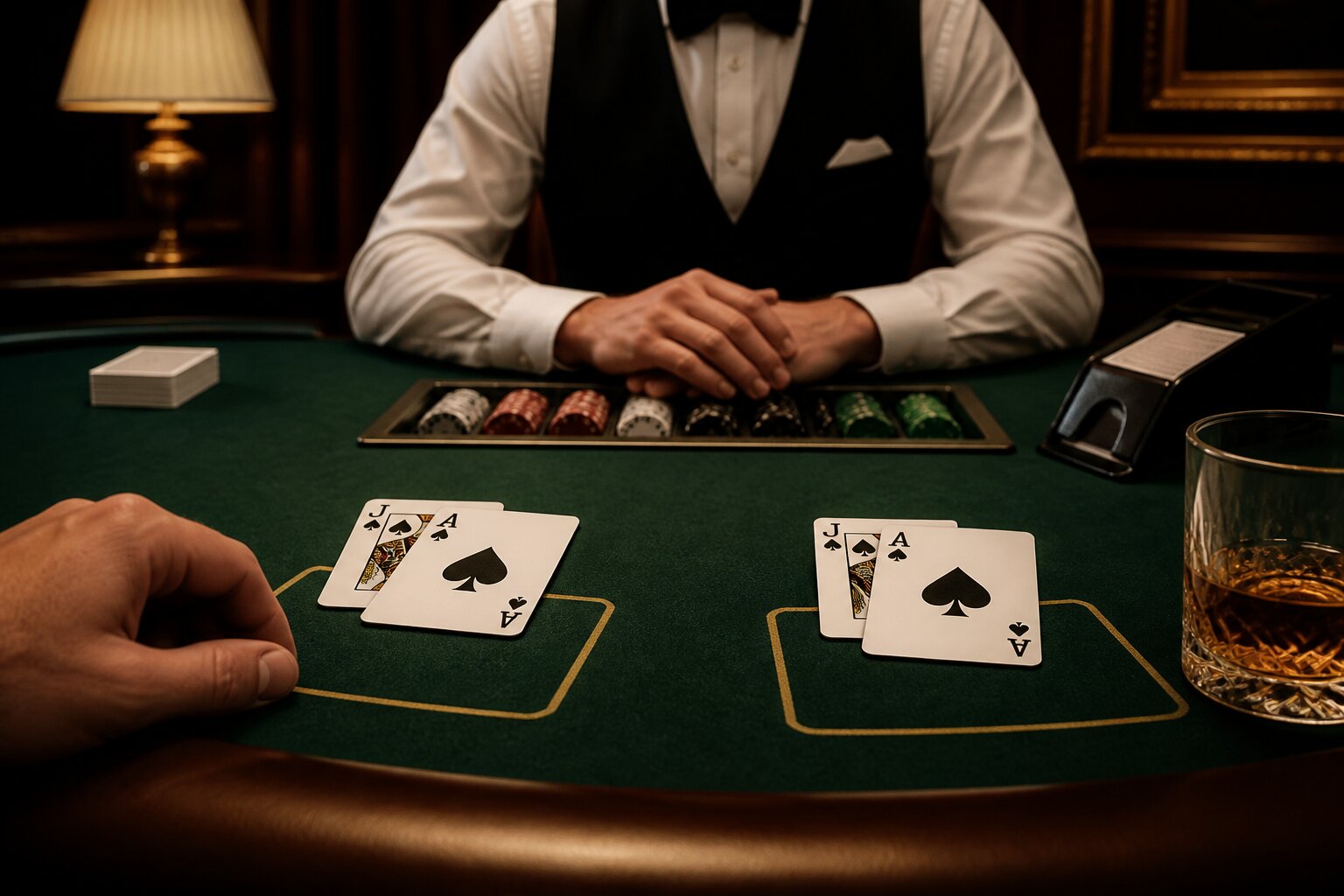
You’ve been dealt the perfect opening hand: an ace and a face card. The dealer then reveals their cards and shows the same. What happens next can confuse even experienced players, because a shared blackjack doesn’t resolve the round the way a single blackjack does.
Blackjack is full of fast decisions and clear rules that determine outcomes in these moments. Understanding the specific settlement for simultaneous blackjacks removes uncertainty and sets expectations for what follows in the game.
Read on to learn exactly how the hand is treated, what that means for your stake, and which variations to watch for so you’re never surprised at the table.
Understanding Blackjack and Its Core Rules
Blackjack is usually played with one or more standard 52-card decks. Each player receives two cards, and so does the dealer; one of the dealer’s cards is typically face up. The aim is to reach a total as close to 21 as possible without going over, and to beat the dealer’s hand.
Card values are straightforward: numbered cards equal their face value, face cards (king, queen, jack) count as 10, and an ace can count as either 1 or 11 depending on which benefits the hand. After the initial deal players decide whether to take another card (hit), keep their total (stand), or use other options such as doubling or splits a pair where offered.
If the first two cards total 21—an ace plus any 10-point card—that is a natural blackjack. This is a distinct outcome from reaching 21 with three or more cards and usually carries different settlement and payout rules. The following sections explain how a natural blackjack is defined and what happens when both sides have one, beginning with the precise meaning of blackjack itself.
What Is Considered a Blackjack?
A blackjack refers specifically to an ace combined with any 10-point card (ten, jack, queen, or king) as the initial two-card hand. A hand that reaches 21 using three or more cards is simply a 21, not a natural blackjack, and is treated differently for payouts and settlements.
For instance, an ace and a king dealt together form a blackjack. But an ace, a six and a four that also total 21 do not qualify as a natural blackjack. This distinction matters because a natural blackjack usually carries an enhanced payout when only the player holds it, while a non-natural 21 does not.
Knowing this definition helps when considering how ties are settled, since most rule differences hinge on whether a blackjack is natural or the result of splitting or additional draws. That distinction leads into how casinos handle tied naturals.
House Rules: How Do Different Casinos Settle Tied Blackjacks?
When both the player and dealer are dealt a natural blackjack on the initial two cards, most operators treat the outcome as a tie, commonly called a push. The player’s stake is returned and no additional payout is made to either side.
Some rule variations exist and are worth noting. If a player splits a pair and then achieves an ace plus a 10-point card on a split hand, many casinos do not consider that a natural blackjack; that split-hand result is treated as a regular 21. In those situations, if the dealer has a natural blackjack, the house may settle the split-hand as a loss or a non-blackjack tie according to its rules. Operators normally publish these specifics before play starts so players know how split hands are handled. The next section explains the usual financial outcome when a tie occurs.
Are Blackjacks Always Treated as Ties?
In the UK, the standard approach is that simultaneous naturals result in a push and the player’s bet is returned. Exceptions are limited to particular table rules—most commonly the split-hand scenario described above—so checking how split hands and post-split 21s are treated will clarify any exception to the general push outcome.
What Are the Payouts for a Blackjack Tie?
When a push occurs, neither side receives the enhanced blackjack payout. The special payout normally awarded to a player’s natural blackjack only applies when that blackjack stands alone; if the dealer also has a natural, the stake is simply returned and play proceeds to the next round.
What Happens to Your Bet in a Blackjack Tie?
If both player and dealer hold a natural blackjack from the initial deal, the round is usually declared a push and the original stake is returned. For example, a £10 stake would simply be credited back to the player; there is no win or loss recorded for that hand.
This consistent settlement simplifies accounting for the round and prevents ambiguity at the table. Where variations can arise is in hands created after splitting or when local table rules alter how certain split outcomes are classified. Those specific treatments are normally displayed with the table rules so there is no uncertainty before play continues.
Player Reactions: How Should You Respond to a Blackjack Tie?
A tied natural leaves the player’s balance unchanged for that hand. Practical next steps tend to be administrative rather than strategic: check the table rules if anything about the settlement felt unclear, and then choose whether to continue playing or step away.
It can be helpful to use any limit-setting tools provided by the casino to manage sessions and stakes; these features support steady play without dramatic swings to your bankroll. If you feel you would benefit from support or guidance about your play, reputable operators list resources such as BeGambleAware and other specialist services.
Playing with clear expectations about rules and outcomes keeps gameplay straightforward, and knowing how ties are handled removes that particular uncertainty so you can focus on decisions in the next hand.
Enjoy Casino Games at Umbingo
We invite you to explore the wide variety of casino games available with us, offering plenty of choice for all types of players. Whether you are seasoned or just fancy a bit of fun, there is something for everyone to enjoy on our site.
Getting started is straightforward: just create your account, make a deposit and you are all set to play. We look forward to welcoming you and hope you enjoy your time with us.
**The information provided in this blog is intended for educational purposes and should not be construed as betting advice or a guarantee of success. Always gamble responsibly.