
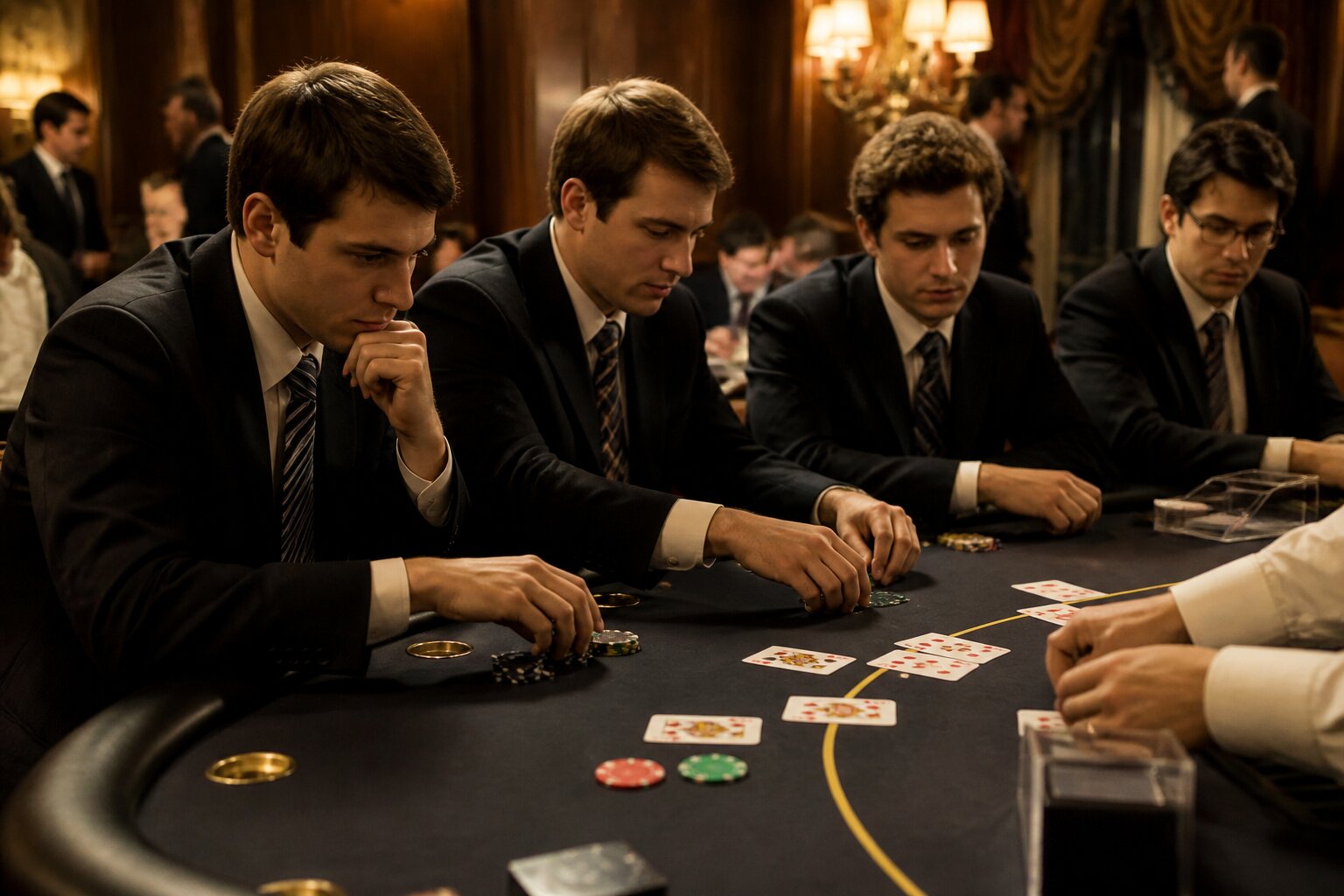
Ever wondered what really happened behind the scenes of one of the most famous casino stories of all time? The MIT Blackjack Team captured attention worldwide, inspiring books and films with their organised, maths-based approach in places from Las Vegas to Atlantic City.
Who were the people behind the cards, what did they actually earn, and where did life take them afterwards? This article walks through the team’s membership, methods, real results and the longer-term outcomes for those involved.
Read on to separate fact from fiction and to discover the practical lessons their story still offers today.
Who Were the Core Members of the MIT Blackjack Team?
The MIT Blackjack Team was built around students and recent graduates from MIT and a few other universities, united by strong numerical skills and a disciplined, cooperative structure. Rather than a loose group of mavericks, they operated like a small enterprise with clearly defined roles.
Key members included:
Bill Kaplan: A principal organiser who professionalised recruitment, training and bankroll management.
J.P. Massar: An early architect of the team’s systems and procedures.
John Chang: A skilled player who later managed operations and training.
Laurie Tsao: A strategist who helped refine playing techniques and team coordination.
These names are prominent because they sustained leadership and helped translate mathematical ideas into reliable team processes. Many others joined over the years, each contributing to bankrolls, play sessions and the team’s evolving methods.
How Did the Team Operate in Casinos?
The team used planned, coordinated approaches in casino settings, with members assigned discrete roles at tables. Some players focused on tracking card composition, while others placed the larger bets when conditions favoured them. Communication was kept subtle so as not to attract attention.
Their method rested on mathematical observation: keeping a running sense of which cards had been played and adjusting bets when the deck composition made favourable outcomes more likely. This is commonly called card counting. It is not a guarantee of profit; it is an attempt to shift the statistical balance in a player’s favour under certain conditions.
Casinos reacted to such advantage play by monitoring behaviour, employing surveillance and, in many cases, removing or refusing service to suspected players. That practical pushback shaped much of the team’s strategy: they adapted constantly, rotating players and changing travel plans to reduce detection.
Myths vs Reality: Did They Really Win Millions?
Stories in film and fiction amplify the glamour and the winnings, but the truth is more measured. The team did produce consistent profits over a period, yet the headline figures are often misunderstood or exaggerated.
Earnings were pooled and shared among many participants. Money was also split with outside backers and reduced by everyday costs, so the net amounts individual players took home were much smaller than sensational reports suggested.
There were winning runs and losing stretches; nothing was guaranteed. The team relied on careful records, disciplined staking and strict rules to manage risk, rather than luck alone. Over time the approach delivered results, but it required persistence and attention to detail.
The picture that emerges is of disciplined, sustained effort rather than instant wealth. The team’s achievements were significant in their context, but they did not translate into overnight fortunes for most individuals involved.
Key practical factors that affected outcomes included:
- pooled earnings split across multiple people and investors
- payments to external backers and legal or management fees
- everyday travel and living expenses that reduced take-home amounts
- periods of losses that offset earlier gains
Taken together, these realities explain why large headline sums rarely reflected what ordinary members actually received.
What Were the Actual Winnings and How Were They Divided?
Contemporary estimates place the team’s total winnings at roughly $3–4 million across several years. Converted and viewed against expenses and the number of people involved, individual shares were generally modest.
Investors who supplied bankrolls received portions of the profits in return for their risk. Players were compensated for time and a share of winnings, but costs such as travel, accommodation and bankroll losses reduced net returns. For many members the outcome was enough to cover major short-term goals—education costs or a home deposit—rather than to fund long-term wealth.
These figures reflect a specific era and operational model; they are not an indication that similar results are likely today.
What Challenges and Controversies Did the Team Face?
Operationally, the team dealt with intense scrutiny from casinos determined to protect their business. Security methods ranged from observation to banning individuals, and these interventions could be highly disruptive.
The team generally avoided illegal methods, relying on memory and permitted observation rather than devices or tampering. Even so, the line between clever advantage play and behaviour casinos considered unacceptable provoked disputes. Staff and security sometimes confronted players, leading to uncomfortable incidents and legal tensions in isolated cases.
On a personal level, the demands of frequent travel, long sessions and high-pressure environments strained relationships and prompted internal disagreements about tactics and money. These human costs were a major factor in the team’s eventual winding down.
What Happened to the MIT Blackjack Team Members Afterward?
After their time with the team, most members moved back into conventional careers where their analytical and organisational skills were valuable. Many found roles in finance, technology, consulting and entrepreneurship. A number went into teaching, research or corporate management.
Their post-team careers often reflected the abilities they had honed while working together. Team members had learned to think quantitatively, manage logistics and collaborate under pressure, and these skills transferred naturally to corporate and academic settings. For nearly all, long-term success came from education and steady professional work, not from their winnings at the tables.
Bill Kaplan became a successful entrepreneur and investor outside the gambling world. Others translated their experience into constructive careers, using the discipline and teamwork they had developed rather than continuing in casinos.
A minority faced consequences related to casino policies, such as being barred from particular venues or subject to enhanced scrutiny. Few, if any, faced criminal charges for their activities; most settled into ordinary lives and careers after leaving the team.
How Is the MIT Blackjack Team Remembered Today?
The team endures as a notable episode in casino history and popular culture, studied for its combination of mathematics, teamwork and operational planning. Their story is often retold with a mix of fact and fiction, so separating the two helps make clearer the lessons to take away.
A Place in Gambling Folklore
They are remembered as an example of applied mathematics and disciplined teamwork in a high-pressure setting. The narrative shows both the potential impact of organised advantage play and the natural limits placed on it by casino countermeasures.
Lessons for Today
Their experience highlights that any form of gambling carries risk and is subject to regulatory and commercial responses. Players and operators alike must follow legal and regulatory frameworks. For those interested in the technical side, the team’s methods offer a case study in probability, risk management and group coordination—but not a blueprint for personal income.
The MIT Blackjack Team’s legacy is less about fortunes won and more about what disciplined, collaborative problem-solving can achieve — along with the clear reminder that lasting success usually comes from conventional careers and careful planning rather than from attempting to beat commercial games.
**The information provided in this blog is intended for educational purposes and should not be construed as betting advice or a guarantee of success. Always gamble responsibly.