
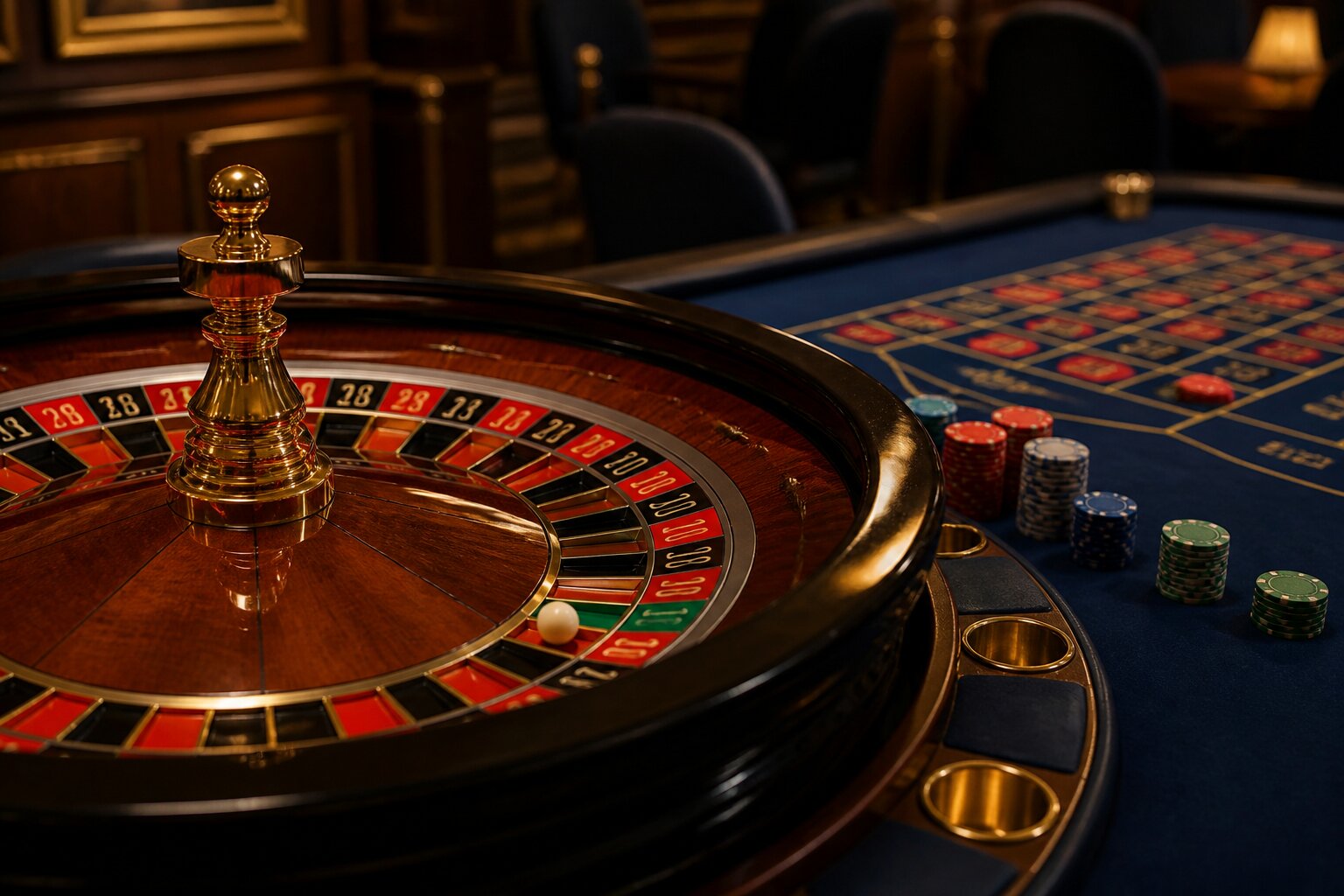
If you’ve ever wondered why French Roulette is often called the favourite among casino fans, you’re in the right place. This classic game stands out for its distinctive table layout and a few features you won’t find in other versions.
Whether you’ve had a spin before or are completely new to roulette, this guide explains the wheel, key rules and the special bets in clear, practical terms to help you play with confidence.
Read on for a straightforward walkthrough that keeps things focused and easy to follow.
What Is French Roulette?
French Roulette is a traditional form of roulette that originated in 18th-century France. It is played on a wheel with 37 pockets: numbers 1 to 36 plus a single zero. The table uses French terms and includes special rules that alter how certain bets are handled, which gives players different outcomes compared with other versions of the game.
The table layout and betting area are typically marked with French words such as "Manque" and "Passe" and the design often emphasises a clear separation between inside and outside bets. Some casinos also offer the La Partage or En Prison rules, which can reduce the house edge on even-money bets when the ball lands on zero. These features make the betting options feel more nuanced than in other roulette variants.
These rules and the table layout create a slower, more measured pace at the table. That old-world style, the use of traditional terminology and the additional betting options are why many players enjoy this version.
How Does The French Roulette Wheel Differ?
At first glance the French wheel resembles the European wheel because both contain a single zero and 37 pockets. The main difference lies in the arrangement of numbers around the rim. French wheels follow a long-standing sequence and spacing that dates back to the game’s origins, which results in a recognisable pattern for experienced players.
A clearer contrast is with American roulette, which has both a single zero and a double zero and therefore more pockets overall. The French table also tends to use French labels and sometimes a more traditional visual design, which affects how special bets are placed.
What Are The Main Rules Of French Roulette?
French Roulette follows straightforward rules that determine how bets are placed and resolved. The wheel contains numbers 1 to 36 plus a single zero, with the zero typically coloured green. Players place chips on the betting table to predict where the ball will come to rest, choosing from a range of options:
- single numbers
- groups of numbers
- colours
- odd or even outcomes
The croupier spins the wheel and releases the ball. Once the ball comes to rest, winning bets are paid out and losing bets collected according to the table rules.
Two rules that set French Roulette apart affect even-money bets when the ball lands on zero.
La Partage
If you make an even-money bet such as red/black or odd/even and the ball lands on zero, you receive half your stake back instead of losing the full amount. This rule applies immediately when zero appears and the round ends.
La Partage reduces the long-term loss on qualifying bets and is one reason many players prefer French Roulette. It typically applies only to even-money wagers and not to inside bets or other special bets.
En Prison
Under this rule an even-money bet that loses to zero can be left on the table for the next spin. If the bet wins on the following spin it is returned to the player; if it loses, it is lost. Some casinos treat the returned stake as a win, while others return only the original stake.
En Prison and La Partage are similar in effect but are not always offered together. Which rule is in force can vary by casino or game variant, so it is worth checking the table rules before you play.
These rules reduce the house edge on qualifying bets by changing how zero is handled, but they do not affect the independence or randomness of each spin. Each spin remains an independent event and past outcomes do not influence future results.
How Do You Place Bets In French Roulette?
When you decide to bet, you choose chip values and place them on the area of the betting layout that matches your prediction. The table has clearly marked sections for single numbers, groups of numbers and broader outcomes such as red/black or odd/even. On live tables the croupier manages the timing of the spin and announces when no more bets are accepted.
After the ball lands, winning bets are paid out and the round concludes. Knowing where to place different bets on the layout makes the process quick and straightforward, whether at a physical table or in an online setting.
What Do The Special Bets Mean In French Roulette?
French Roulette includes special bets known as call bets or announced bets that cover specific sectors of the wheel rather than areas on the betting grid. These are commonly used by players who focus on wheel coverage.
Here is a brief introduction to the main special bets and what they cover. These descriptions follow for clarity before you place such wagers.
- Voisins du Zéro: Covers the numbers nearest to zero on the wheel.
- Tiers du Cylindre: Covers about a third of the wheel opposite zero.
- Orphelins: Covers numbers not included in the other two bets.
There are smaller calls such as Jeu Zéro, which focuses on numbers immediately around zero, and neighbour bets that include a chosen number plus a set of adjacent numbers. On live tables you signal these bets to the croupier; online they are usually selectable as options. These bets offer a different way of thinking about coverage and can suit players who prefer wheel-based strategies.
Understanding The Table Layout & Bet Types
The French table might look detailed at first, but it is arranged to separate focused number bets from broader wagers. Taking a moment to learn the areas for each bet type helps you make decisions quickly and avoids mistakes when placing chips.
Inside Bets vs Outside Bets: What’s The Difference?
Inside bets occupy the central grid of the table and include wagers on single numbers, small groups or adjacent-number patterns. These bets usually pay higher amounts but cover fewer numbers.
Common inside bet examples are:
- Single number (a straight-up).
- Split (a bet on two adjacent numbers).
- Street (a row of three numbers).
- Corner and six-line bets (four and six numbers respectively).
Outside bets are placed on the edges of the number grid and cover wider outcomes such as colour, odd/even or dozens. Payouts are lower than inside bets, but they cover more of the wheel and are subject to the La Partage and En Prison rules when applicable.
Typical outside bet examples include:
- Red or black.
- Odd or even.
- Low (1-18) or high (19-36).
- Dozens and columns.
Understanding these categories helps you balance risk and reward according to your preferences. Learn where to place chips for each bet so you can act quickly and avoid accidental wagers. Remember to play within your limits and treat the game as entertainment rather than a way to make money.
What Is The Role Of The Croupier In French Roulette?
The croupier oversees each round to ensure play runs smoothly and fairly. Their role is to manage the game from start to finish and to make sure the casino's procedures and table rules are applied consistently.
Typical duties include:
- checking and accepting bets before the spin, and ensuring stakes do not exceed table limits
- operating the wheel and releasing the ball in a controlled manner
- announcing the winning number clearly to all players
- clearing losing bets from the table and paying winning bets accurately
- inspecting chips and notes to verify validity and value
- handling disputes or queries at the table and escalating when necessary
- watching for irregular play, potential cheating or fraud, and reporting any concerns
- enforcing responsible gambling and age verification policies as required by regulations
On live online tables the croupier performs the same duties for remote players, combining traditional table management with clear, audible announcements so everyone knows the outcome. They also work with camera and streaming systems to ensure spins are visible and transparent, and they follow the same regulatory and safety procedures that apply in a physical casino.
Common Myths About French Roulette: Fact Or Fiction?
There are several persistent myths about roulette that are worth correcting. One common misconception is that numbers are “due” after not appearing for a while. In reality each spin is independent and outcomes are random, so past results do not influence future ones.
Another widespread belief is that certain betting systems can reliably predict outcomes or produce guaranteed wins. No system can change the independence of spins, so betting approaches should be chosen for how they manage risk rather than for any promise of certainty.
Finally, while French rules such as La Partage and En Prison change the treatment of even-money losses, they do not otherwise alter the independence of spins or produce predictable results.
How Does French Roulette Compare To Other Roulette Variants?
French, European and American roulette all share the same core concept, but there are practical differences that affect play. French and European wheels both have a single zero and 37 pockets, while American roulette adds a double zero, increasing the number of pockets and changing the house edge.
French Roulette distinguishes itself with its table language and the La Partage and En Prison rules, which can improve returns on even-money bets compared with some other variants. European games may be very similar but typically omit those two specific rules. Knowing these differences helps you choose which version fits your style of play.
Where Can You Play French Roulette In The UK?
French Roulette is available both online and in selected land-based casinos across the UK. On our site you can access digital and live dealer French Roulette tables that replicate the traditional experience. All players must be aged 18 or over.
Our platform provides tools to help you manage your play, including deposit limits, reality checks and cooling-off options. We also provide links to professional support services and self-exclusion measures for anyone who needs extra assistance. Play within the limits you set and make use of these controls to keep your gaming experience under your own terms.
Enjoy French Roulette with an informed and measured approach, and make use of the available safeguards to keep play enjoyable and under control.
**The information provided in this blog is intended for educational purposes and should not be construed as betting advice or a guarantee of success. Always gamble responsibly.