
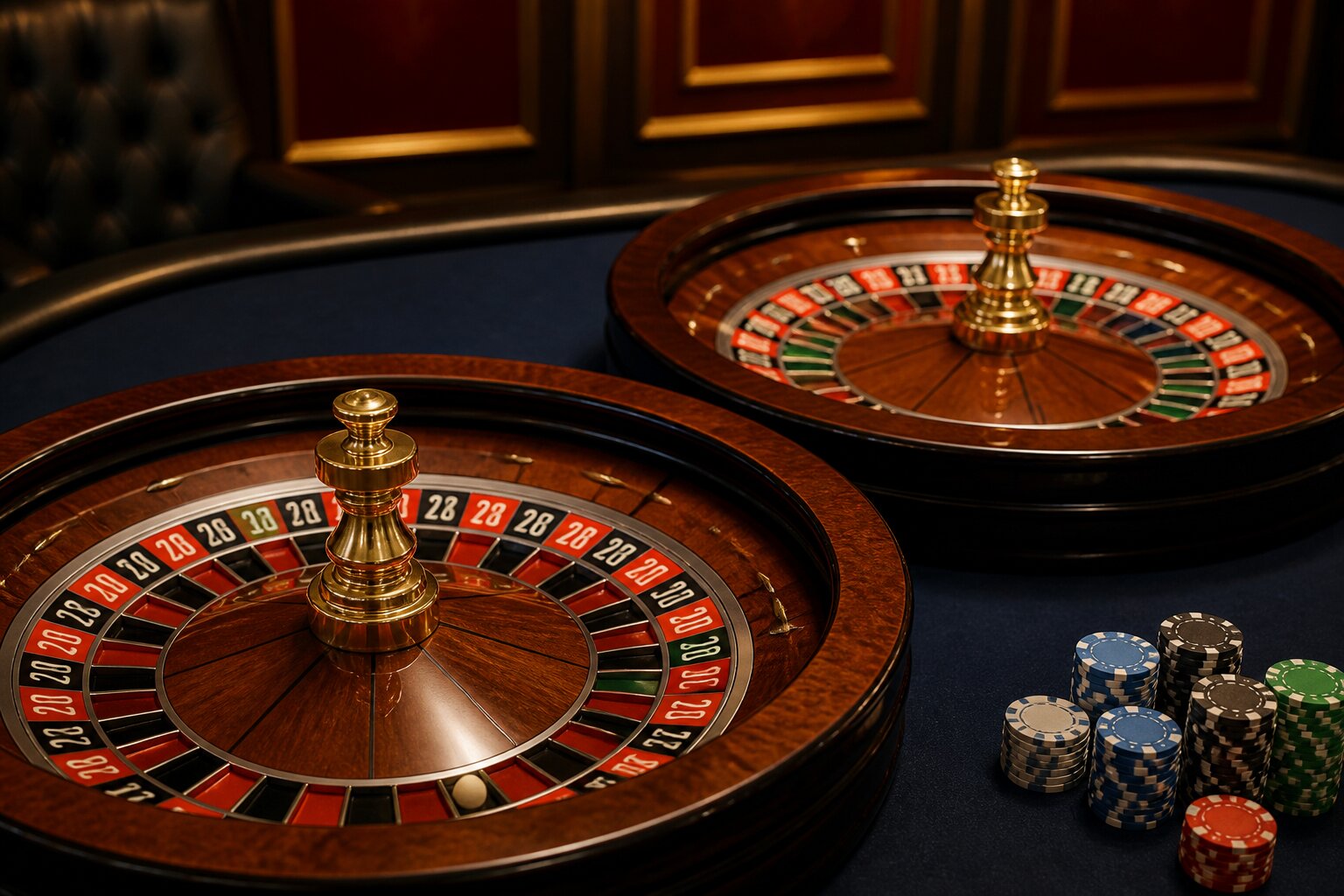
Roulette is one of the world’s most popular casino games, known for its spinning wheel and sense of excitement. There are two main wheel types—European and American—and the differences between them affect the mathematics of the game and how you might approach betting.
Which wheel gives you the better mathematical position and why the layout matters are the main themes here. Read on to see how the wheels, table layouts and bet types compare, and what that means for your expected returns.
What Are the Main Differences Between European and American Roulette?
The clearest distinction is the number of pockets. European roulette has 37 pockets, numbered 0 to 36, with a single green zero. American roulette has 38 pockets: the same numbers plus an extra green double zero (00). That extra pocket is the single structural change that shifts the maths in the casino’s favour.
The physical order of numbers around each wheel differs too, but that only affects wheel-based bets and the look of the wheel; it doesn’t change fundamental payouts or the basic options on the betting grid. The table layouts are largely the same, with the American layout including an additional space for the double zero above the number grid.
Both versions let you place inside bets (such as a straight-up number or split) and outside bets (red/black, odd/even, dozens and columns). If you prefer a table without the extra green slot, the European layout is the simpler option. If you like the variety of some niche bets that rely on the double zero, you’ll find them only on American-style tables.
As we move into the wheel and layout details next, keep the presence or absence of the second zero in mind — it’s the single factor that drives most of the differences discussed below.
How Do the Wheels and Table Layouts Differ?
European wheels have 37 numbered segments, each with a single green zero and the remaining numbers split between red and black. American wheels add a second green pocket for 00, bringing the total to 38 segments and changing how certain wheel-based bets cover the layout.
On the table, the most obvious visual difference is the extra box for 00 on the American layout, sitting beside the 0 at the top of the grid. Otherwise, the table is organised the same way: a number grid for inside bets, outside sections for even-money and group bets, and separate areas for dozens and columns.
The sequence of numbers around the rim differs between the two wheels, which is why some wheel-specific bets are expressed differently or offered only on certain tables. In European casinos you may see a racetrack-style betting layout used for called or wheel-section bets; that feature is less common on American tables. These layout and wheel distinctions influence how certain specialised bets are placed and how they map to groups of pockets.
Now that the physical differences are clear, the next section explains how they translate into the house advantage you’re actually playing against.
Which Version Offers Better Odds for Players?
The version with the lower house edge offers better expected returns for players over the long run. European roulette has a house edge of about 2.7%, reflecting the single zero among 37 pockets. American roulette, with its extra double zero, increases that edge to roughly 5.26%.
Payouts for standard bets are the same in both versions — for example, a straight-up number pays 35 to 1 — but the probability of hitting a specific number differs because of the additional pocket. A straight-up bet on a European wheel has a 1 in 37 chance; on an American wheel it is 1 in 38. That small change in probability is what raises the house edge on the American wheel.
These figures represent long-term averages, not guarantees of any single session. It’s sensible to decide the rules and odds you are comfortable with before you start a session, and to play within personal limits.
With those odds in mind, the following section unpacks the house edge more precisely and why that single extra pocket makes such a difference.
House Edge Comparison: European vs American Roulette
Every casino game includes an inbuilt mathematical advantage for the house; in roulette this advantage comes directly from the green zero pockets and the way payouts are structured. Because the payouts for winning bets are calculated as if there were only the standard numbered pockets, the presence of zero pockets creates the edge.
European roulette’s single zero produces a 2.7% house edge. That figure arises because bets are paid out as though only the 36 numbered pockets matter, while the zero still removes winning outcomes from those bets. Adding a second zero on the American wheel increases the number of nonscoring pockets, which pushes the edge to about 5.26%.
No choice of bet or betting approach alters that built-in advantage — it is part of the game’s design. Understanding this helps when comparing tables or deciding whether to use strategies that aim to manage bankroll rather than change the intrinsic odds.
Next, we’ll look at specific bets that differ between the two versions and how those options might influence your table selection.
Why Does the House Edge Differ in Each Version?
The difference comes down to pocket count and payout structure. Both versions pay the same on winning bets, but with two zeros the American wheel gives the player fewer winning outcomes for identical wagers. The maths is straightforward: identical payouts and more losing pockets equals a larger house edge.
That extra pocket is the single reason the house maintains a higher percentage over time on the American wheel, and it’s why many players favour the European version when available.
Betting Options Unique to Each Roulette Variant
Most standard bets — straight, split, street, corner, dozens, columns and even-money bets — are common to both versions and carry the same payouts. Where they differ is in a few variant-specific wagers.
American tables offer the Five Number Bet (often called the Basket Bet), which covers 0, 00, 1, 2 and 3 and pays 6 to 1. This bet is available only because the double zero exists on the American wheel and is typically one of the least favourable bets in terms of house edge.
European tables sometimes provide called or French bets that target wheel sections rather than individual spots on the table. Examples include Voisins du Zéro, Tiers du Cylindre and Orphelins. These can be placed using a racetrack-style layout and are useful for players who prefer to cover contiguous wheel sectors instead of isolated numbers. Availability varies by table and venue, so the selection of side bets may influence your choice of table.
Knowing which special bets appeal to you is useful when choosing a table, since they can alter the way you distribute play without changing the core payout structure.
How Do Payouts and Probabilities Compare?
Standard payouts are consistent across both versions: a straight-up number pays 35 to 1, a split around 17 to 1, a street 11 to 1, and a corner 8 to 1. The difference is in the probability attached to those payouts because of the pocket count.
On a European wheel a straight-up win is 1 in 37; on an American wheel it is 1 in 38. For even-money bets such as red/black or odd/even, the payout remains 1 to 1 but the presence of one or two zeros reduces the proportion of winning outcomes accordingly.
These probability differences are small for any individual spin but compound over many spins, which is why the house edge figures mentioned earlier diverge. If you prefer a clearer mathematical edge, the European wheel offers the better expected return.
If you want to experiment without financial risk, many venues and online platforms provide free-play tables where you can observe payouts and bet options before staking real money.
Which Should UK Players Choose?
For UK players deciding between the two, the practical considerations are straightforward. If your priority is the lowest possible house edge, choose the European wheel. If you want access to the particular bets that rely on the double zero or prefer a specific table aesthetic, you might opt for American roulette.
Also consider availability: many UK venues and operators favour the European layout, but both types can appear depending on location and the provider’s offerings. Look at the table rules and bet menus before sitting down so you know which special bets are offered and how they map to the wheel.
Play Responsibly
Treat roulette as entertainment and set limits that reflect what you can comfortably afford to spend. If gambling stops being enjoyable, take a break or seek help; free, confidential support and advice is available at BeGambleAware.org.
Enjoy the game and choose the version that best fits how you like to play, knowing the European wheel generally offers the lower house edge while the American wheel provides a different set of betting options.
**The information provided in this blog is intended for educational purposes and should not be construed as betting advice or a guarantee of success. Always gamble responsibly.