
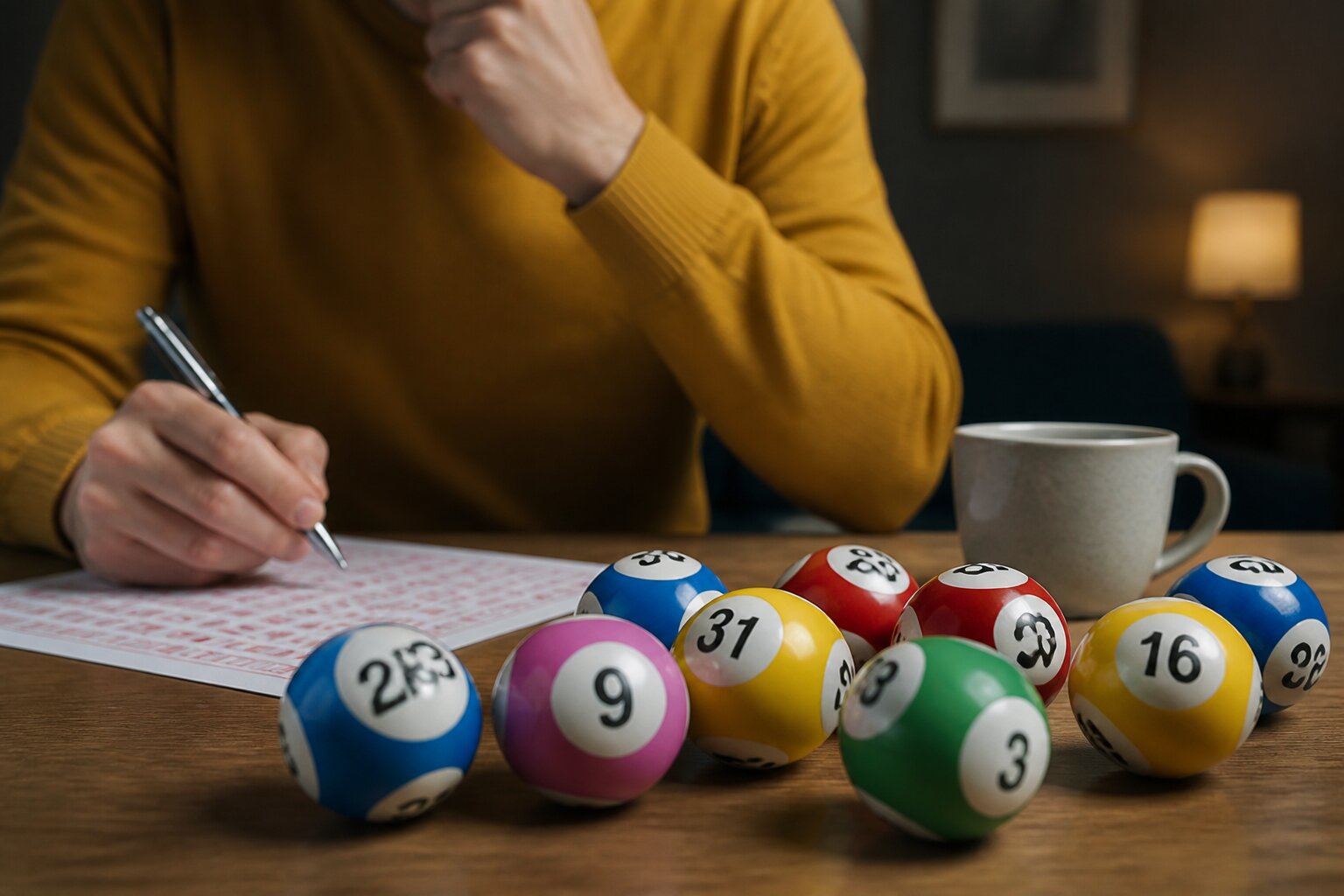
There’s nothing quite like the entertainment of seeing your lottery numbers pop up one by one on the screen. But as you double-check your ticket, a niggling question might cross your mind: does the order of those numbers really matter when it comes to claiming the jackpot?
If you’ve ever wondered whether you need your numbers in a specific order or if you just need the right ones, you’re not alone. Understanding how draws work can save a lot of unnecessary worry.
How Are Lottery Numbers Drawn and Checked?
Lottery draws in the UK use machines that mix numbered balls so each ball has the same chance of being selected. The physical process is supervised and audited to make sure it follows the rules and is repeatable. After the draw, organisers publish the results immediately so players can check their tickets.
When tickets are checked, it is the numbers themselves that are matched with the official results. The layout or sequence on your printed ticket is irrelevant; what matters is whether the set of numbers on your ticket corresponds to the set drawn. This matching is handled mechanically or digitally to reduce human error.
Knowing how numbers are drawn and compared makes it easier to understand why order is usually not important, and sets us up to look at the different draw formats next.
The Difference Between Ordered and Unordered Draws
Not every lottery-style game treats number order the same way. Many popular draws use unordered formats, where only the presence of the correct numbers matters. Other formats require numbers to appear in a particular sequence, and those are generally presented as different kinds of games.
National Lottery Draws: Do You Need Numbers in Order?
For flagship draws such as Lotto and Thunderball, matching the set of winning numbers is what wins prizes. If the draw produces 4, 12, 23, 33, 41 and 47, any ticket containing those six numbers qualifies for the top prize regardless of the order printed on the ticket. That makes checking straightforward: it’s a set comparison rather than a sequence check.
This simplicity is helpful for players and for the systems that manage prize payments.
Euromillions and Other Games: Are There Any Exceptions?
EuroMillions follows the same unordered approach for its main numbers, though it also uses supplementary numbers (Lucky Stars) that factor into prize tiers. By contrast, some games — often daily or regional number games — may require a specific order. Examples elsewhere include Pick 3 or Pick 4-style formats where the exact sequence determines the prize.
If a game uses ordered draws, the rules will make that clear in the entry information. The next section looks at what happens when ticket numbers match but appear in a different sequence than the draw.
What Happens If You Have the Right Numbers but in the Wrong Order?
In unordered formats like Lotto and EuroMillions, having the correct numbers in a different order still qualifies a ticket for the corresponding prize tier, including the jackpot where applicable. Ticket validation systems simply check that each winning number appears on the ticket; they do not require numbers to be arranged identically to the order called in the draw.
Where order does matter, however, the prize structure will reflect that — the sequence itself forms part of the winning condition. If you play a format that requires order, the game terms will specify how prizes are allocated for exact matches versus partial or unordered matches. With that in mind, it’s worth checking each game’s rules to understand how prizes are determined.
Common Misconceptions About Lottery Wins
Several misunderstandings keep circulating among players. One is the idea that number order is important in mainstream draws — which, as explained earlier, is not the case for principal UK draws. Another is that particular number choices or patterns alter the odds; in standard draws, every valid combination has the same mathematical probability.
Buying more tickets increases the number of entries one holds, but it does not change the inherent probability for any individual combination. Concerns about minor ticket imperfections preventing a payout are also exaggerated: provided a ticket is valid and the numbers can be verified, claims are handled according to the operator’s rules and procedures.
If a game’s structure is different — for instance, if it requires a specific order — the terms will highlight that so players know what to expect. Next, the article explains practical ways to check a ticket so you can be confident about any result.
How to Check Your Lottery Ticket Correctly
Checking tickets is a straightforward process when you use an official results source. Compare the numbers printed on your ticket with the published winning numbers and any supplementary numbers relevant to the game. For paper tickets, inspect each number carefully; for online entries, account systems typically flag winning entries automatically.
Where a prize depends on matching main numbers plus a bonus or supplementary number, make sure you understand which combination is required for each prize tier. If a ticket appears to be a winner, follow the operator’s published claim process and keep the ticket safe until the claim is resolved.
With a clear approach to checking, you can avoid unnecessary doubt and act promptly if you do hold a winning entry. The final section pulls these points together and outlines what to keep in mind going forward.
Summary: Understanding the Rules for Lottery Jackpots
For major UK draws such as Lotto and EuroMillions, number order does not affect whether a ticket wins the jackpot — it is the set of winning numbers that matters. Some game formats do require a specific sequence, so it is important to read the rules for any game you play. Ticket-checking systems and draw procedures are designed to be objective and transparent to ensure fair outcomes.
Playing should be treated as a form of entertainment. Players must be 18 or over, and it is sensible to set limits that match personal circumstances so the activity remains enjoyable. If you play, keep tickets safe, use official result sources to check them, and follow the operator’s claim instructions if you win.
**The information provided in this blog is intended for educational purposes and should not be construed as betting advice or a guarantee of success. Always gamble responsibly.