
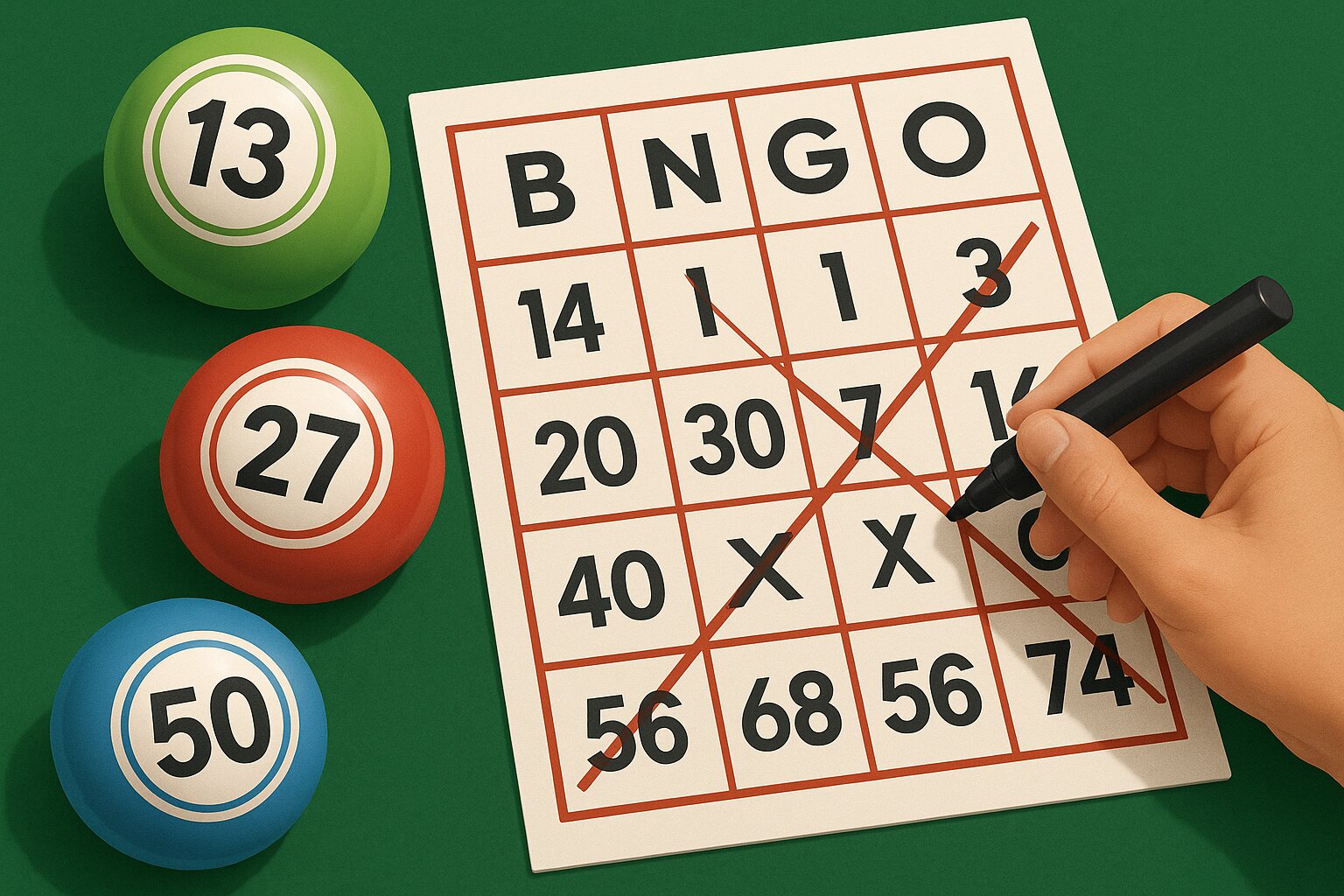
Ever found yourself waiting for that last number in bingo, wondering exactly which line will get you a win? With several ways to mark off a card, it can be confusing which patterns count in a given game.
If you’ve asked whether a diagonal line is acceptable or whether you always need a full house, you’re in the right place. This guide explains the standard rules and common variations so you’ll know what to expect at the table or online.
Read on to learn how patterns work, how wins are verified, and what happens if more than one player completes the same pattern at once.
Bingo is a straightforward game, and standard winning patterns are simple to follow:
Horizontal line: Mark off all numbers in a row (side to side). This is the most common way to win in classic bingo.
Vertical line: Mark off all numbers in a column (top to bottom).
Diagonal line: Mark off five numbers diagonally, from one corner to the opposite corner.
Each of these patterns could be a winning line, depending on the specific game you’re playing. Always check the rules before you start, as some games may require different patterns for a win.
What Are The Official Ways To Win Bingo?
There are three main outcomes that most sessions use to determine winners, and these are set out clearly by the operator before play begins.
- One Line: Complete all the numbers in a single row or column, depending on the card layout and the game’s definition of a line. The first player to match the declared pattern typically claims the prize for that round.
- Two Lines: Cover any two required lines on the same ticket; these might be two horizontal rows or other combinations specified for that game.
- Full House: Every number on the bingo card is covered. This usually carries the largest prize for the session.
Operators can also introduce special patterns or additional prizes for particular sessions, so look for that information on display or in the game rules. Knowing which pattern is in play prevents misunderstandings when the last numbers are called.
How Do Bingo Patterns Work?
A pattern is simply the layout you must complete on a card to be eligible for a prize. The pattern will be announced or shown before each game, and it defines exactly which squares must be marked.
Straight lines are the simplest examples — horizontal, vertical or diagonal — but patterns can also be more intricate, such as an X, a square, or a bespoke design for a themed session. The key point is that the pattern is fixed for the round: only the squares within that design count towards a win.
Operators usually display the pattern visually so players can compare their cards quickly. For people playing online, the pattern is often shown on the game lobby or the game screen, and automated checking highlights matched patterns as numbers are called.
If a pattern changes between rounds, the shift is part of what keeps play varied. That variation also makes it worthwhile to take a moment to confirm what’s required before each new game begins.
Is Diagonal Bingo Always Allowed?
Diagonal lines are accepted in many games, but they are not universally valid. Some sessions permit any straight line, including diagonal; others restrict wins to horizontal or vertical lines, or use entirely different patterns.
Because each game can set its own rules, it’s essential to check the details provided before play starts. In physical halls this information will be announced or visible on screens, and online platforms list the pattern on the game page. Don’t assume diagonals count unless the operator has stated they do for that particular round.
If you’re unsure in a hall, a brief question to staff will clear things up. For online play, the pattern display and the automated checking generally eliminate ambiguity from the outset.
Are There Differences Between Online And In-Person Bingo?
Bingo in a hall and bingo on a screen follow the same basic principles, but the experiences and practicalities differ.
In halls the caller explains the game, players mark tickets by hand, and there is a social atmosphere that can influence pacing. Display screens or printed notices show the pattern and prize structure, and staff handle verification if someone calls a win.
Online play offers a wider selection of formats and automated verification. Software can support different ball counts (for example, 75-ball and 90-ball variants) and show the required pattern clearly. Online systems also credit winnings instantly and often provide tools to manage play, such as session timers or spend controls.
Both formats must meet regulatory standards and make the rules available. The main difference is how the information is presented and how wins are confirmed: manually in halls versus automatically online.
Variations In Bingo Halls
Halls often run traditional sessions that stick to classic patterns, but they can also schedule themed games with unique shapes or community prizes. The caller or venue staff will clarify any special conditions, and checking displays helps avoid confusion when the round begins.
Online Bingo Game Types
Online games frequently experiment with format and pace. Some rooms focus on quick rounds and unusual patterns, while others replicate the slower, hall-style experience. The software highlights matched squares and notifies you if a pattern is complete, reducing the need to scan multiple cards.
Whether you prefer the communal feel of a hall or the convenience of online play, the underlying rules for patterns and verification remain the same.
Common Myths About Bingo Winning Patterns
A few persistent misunderstandings circulate among players. One is that where you sit in a hall or which card you buy will affect the outcome; in reality, the numbers are drawn randomly and every valid card is treated the same. Another is that particular patterns pay more by tradition; in fact, any differences in payout are declared ahead of play and form part of the round’s rules.
Some people think buying more cards guarantees a better return. While more cards do increase the number of combinations you hold, they also increase the amount you spend. It’s wise to balance the number of cards with the amount you’re prepared to commit to a session.
Treat common beliefs with scepticism and rely on the published rules and prize notices for accurate information.
How To Check If Your Bingo Win Is Valid
Ensuring a win is valid starts with knowing the pattern for the round. That pattern will specify precisely which squares need marking; any extra or missing marks are irrelevant to claiming a prize.
In a bingo hall, players call out when they complete a pattern. Staff then pause play briefly to inspect the card and confirm the match against the numbers drawn. Online games use automated systems that check tickets in real time and notify the player if the pattern is complete, with winnings applied to the account where appropriate.
If there is any dispute or uncertainty, venues and platforms keep records of the numbers called and the tickets played. Asking staff or consulting the game terms will explain how validation works for a particular session. Keeping informed about the rules before play starts reduces the chance of misunderstandings when a win occurs.
What Happens When Multiple Players Win At Once?
Occasionally, several players will complete the same winning pattern on the same number. Game terms set out how such situations are handled so that payouts are fair and transparent.
Shared Prizes
When multiple valid winners are identified simultaneously, the prize for that pattern is typically divided equally between them. For example, if three players complete a full house together, the published prize is divided into three equal shares. Some operators may instead provide alternative distributions or additional consolation prizes, but any such arrangements are explained before play.
Fair Play and Verification
Operators must apply their stated rules consistently and keep clear records of the numbers called and the winning tickets. That transparency helps resolve ties and maintains confidence in outcomes. If you want clarification about how ties are managed, staff can explain the venue’s or site’s specific practice.
Playing within your limits and being aware of the rules ensures you can enjoy the game with confidence. With the verification procedures and prize-sharing rules understood, you’ll know what to expect when multiple winners are declared.
**The information provided in this blog is intended for educational purposes and should not be construed as betting advice or a guarantee of success. Always gamble responsibly.