
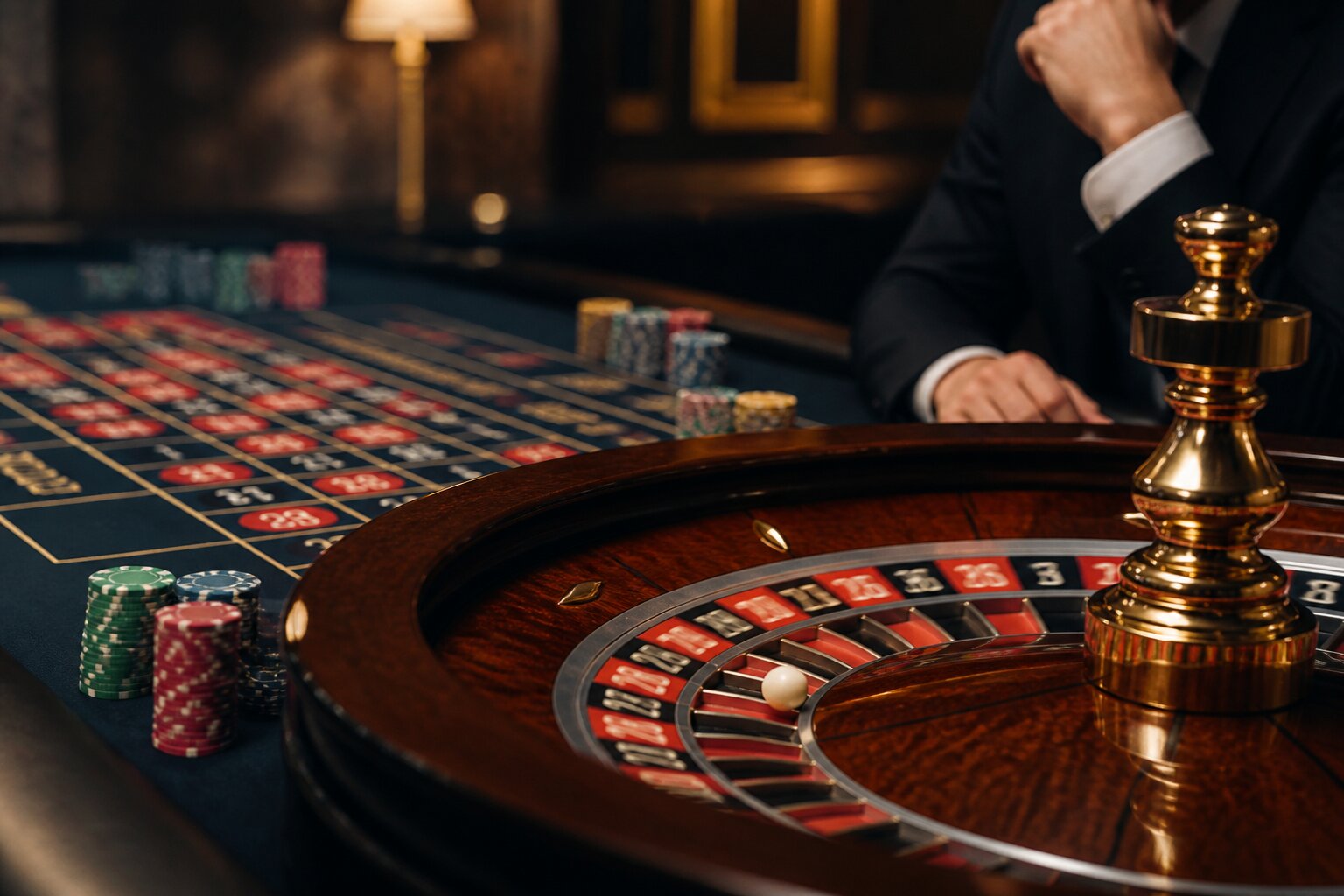
Roulette is a staple at casinos, both in person and online. The spin of the wheel and the ball’s final resting place give the game a clear structure that makes results easy to follow.
That visibility encourages players to look for sequences and trends on the board, wondering if a run of one colour or a stretch of odd numbers signals what will come next. In this article we’ll examine those common patterns, explain why they appear to exist, and set out what they actually mean for someone placing a bet.
If you want to understand how patterns form and whether they matter for your play, read on — the next sections unpack the ideas and common misconceptions in a straightforward way.
What Are The Most Noticed Roulette Patterns?
When players watch a table, certain sequences stand out because they are easy to spot. Runs of red or black, strings of odd or even results, and stretches of high or low numbers are the patterns most often noticed. Dozens and columns on the betting layout sometimes show clusters too, which can catch the eye.
People naturally shorthand these observations — for example, calling a series “five reds in a row” — and then form expectations about what might happen next. Those expectations are shaped by how the brain looks for order in events. But it’s important to separate the way patterns look on the display from any claim that they change the chances for future spins. This section sets out the familiar patterns so we can refer back to them later when discussing what they actually mean.
Why Do Players Look For Patterns In Roulette?
Players search for patterns for a few clear reasons. First, spotting a trend creates a feeling of structure in what is otherwise unpredictable, which makes the game more absorbing. Second, tracking results provides a simple, repeatable task during play, which many find entertaining. Third, because money is involved, there is an incentive to try to make sense of what is happening.
Those psychological drivers explain why patterns are so compelling, but they do not make the patterns predictive. Understanding why people look for patterns helps clarify why those sequences feel meaningful, even when they do not alter the underlying probabilities.
Can Roulette Outcomes Really Be Predicted?
Roulette outcomes cannot be predicted. Each spin is an independent event and the chance of any particular outcome remains the same every time the wheel is spun. For online games, randomness is generated by tested systems that produce statistically fair results. For physical tables, equipment is maintained and checked so no individual number or sector gains an unfair advantage.
Claims that roulette can be systematically predicted should be treated with scepticism. No method or system can change the mathematical chances that govern each spin. With that in mind, players benefit from focusing on how they manage their play rather than on attempts to forecast specific results.
The Randomness Behind Every Spin Explained
Roulette is designed so that each spin is unaffected by the ones that came before it. That design is the cornerstone of the game: the rules and equipment, or the software used for digital versions, are set up to make outcomes independent.
At a physical table, regular maintenance and checks remove mechanical bias. In the digital environment, certified random number systems are audited to ensure their outputs conform to statistical expectations. The result is that the distribution of numbers over a large number of spins matches the theoretical probabilities for the wheel type you are using, and small sequences or clusters are simply expected variation within that distribution.
Understanding this helps to see why spotting a streak gives only limited information about future spins: the sequence is a description of what has already happened, not a forecast for what comes next.
How Do Roulette Wheels Maintain Fairness?
Casinos and software providers use a combination of maintenance, regulation, and testing to keep roulette fair. Physical wheels are inspected for wear and balance, and software is subject to independent testing to confirm that outcomes follow the expected statistical patterns.
Regulatory frameworks require transparent processes and regular audits so operators must demonstrate that their games operate properly. These safeguards are in place so players can trust that results are produced according to the game’s rules and that there is no hidden influence affecting the spins.
Popular Myths About Predicting Roulette Outcomes
Several persistent myths claim ways to beat roulette, but none alter the underlying probabilities. Betting systems such as the Martingale or Fibonacci only change bet sizing; they do not change the odds of any single spin. Likewise, the idea of “hot” or “cold” numbers — that certain numbers are more likely because they have appeared frequently or infrequently — misunderstands independence between spins.
These ideas can still shape how people play, which is why they remain popular. The value in addressing them is practical: players who recognise the limits of these myths can make clearer choices about how they want to engage with the game.
Are Visual Patterns Just Coincidences?
Visual patterns are best understood as coincidences that arise naturally from repeated, independent events. When you observe the board over many spins, clusters and runs will appear purely because random outcomes sometimes group together. Such groupings do not indicate any change in the wheel, the table, or the underlying probabilities.
That does not mean such patterns are uninteresting. They form part of the game’s surface-level appeal and can make play more engaging. Noticing a streak or a cluster is a normal human response to visual stimuli and can add excitement to the experience.
What matters for decision-making is the distinction between noticing a pattern and assuming it has predictive power. The former is an observation; the latter is an inference that, in roulette, is not supported by the mechanics of the game. Each spin is independent, so past results do not change the odds of future outcomes.
Players should be aware of common cognitive traps related to patterns, such as:
- expecting short-term clusters to continue indefinitely
- assuming a long run makes an opposite outcome more likely
- believing that the layout of past results can be used to beat the house edge
Recognising patterns can be part of enjoying the game, but relying on them for strategy can lead to poor choices. Keep decisions grounded in an understanding of randomness and the fixed probabilities involved.
The Role Of Probability In Roulette Patterns
Probability provides the framework for interpreting what happens on the wheel. Each sector or number has a fixed probability on every spin, depending on whether the wheel is European, American, or another variant. Over many spins, the frequency of outcomes tends to move toward those probabilities, but in smaller samples apparent imbalances and streaks are to be expected.
Knowing these probabilities helps set realistic expectations about outcomes and variance. It also clarifies why no strategy can change a single spin’s chance of landing on a particular number or colour. Players who understand probability can plan their play in a way that matches their preferences for risk and entertainment.
What Should You Know Before Trusting Patterns?
It’s worth pausing and considering the mechanics behind any pattern you might be tempted to follow. The key points are straightforward: patterns can be interesting to watch, but they don’t alter the rules that determine each spin’s outcome. No system can overturn the independence of spins or the fixed probabilities of the wheel.
If you choose to follow a pattern-based approach, treat it as a personal preference for how you experience the game rather than a method for guaranteed advantage. Keeping that perspective makes it easier to enjoy roulette without confusing momentary sequences for reliable signals. If you ever want to change how you play, think about the experience you want and set limits that reflect that choice.
Final thought: patterns make the game visually and mentally engaging, but they do not provide a reliable forecast of future results.
**The information provided in this blog is intended for educational purposes and should not be construed as betting advice or a guarantee of success. Always gamble responsibly.